Search every volume:
Volumes
-
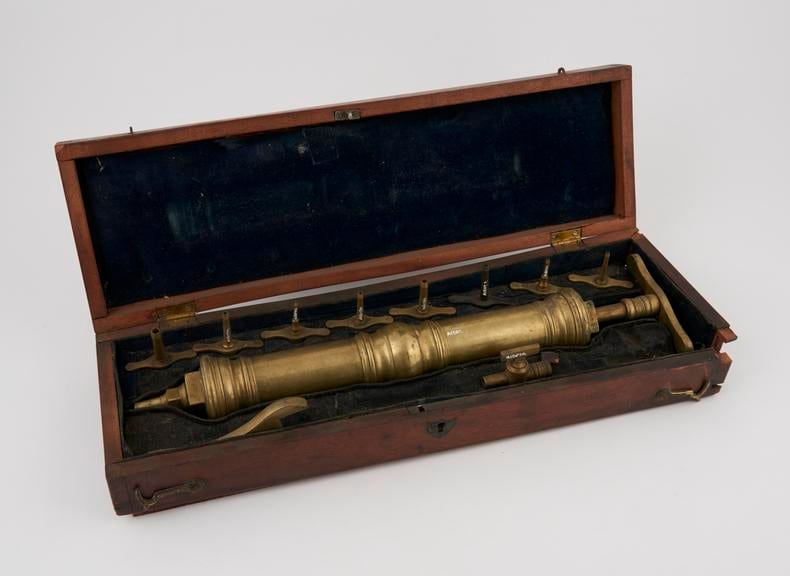
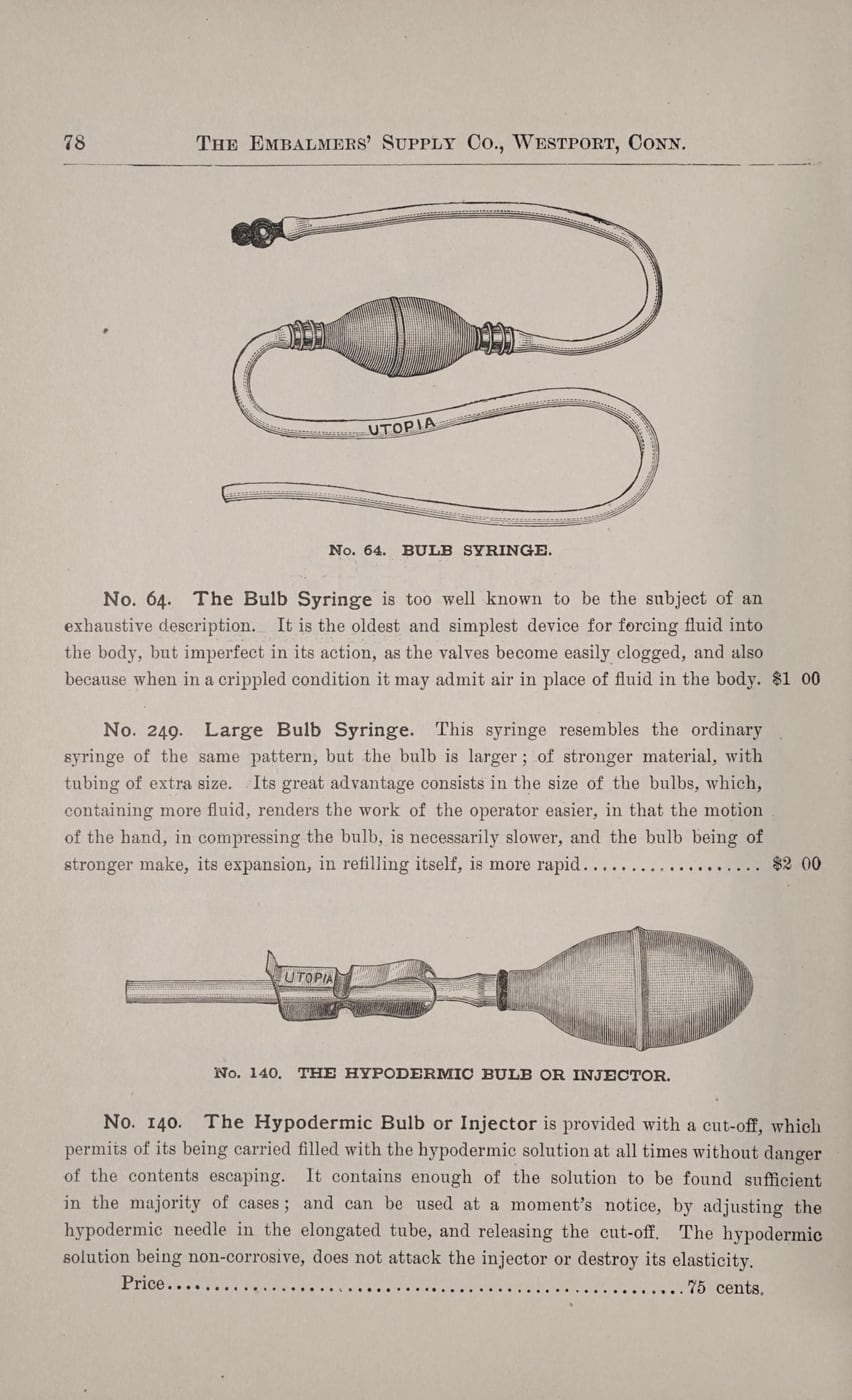
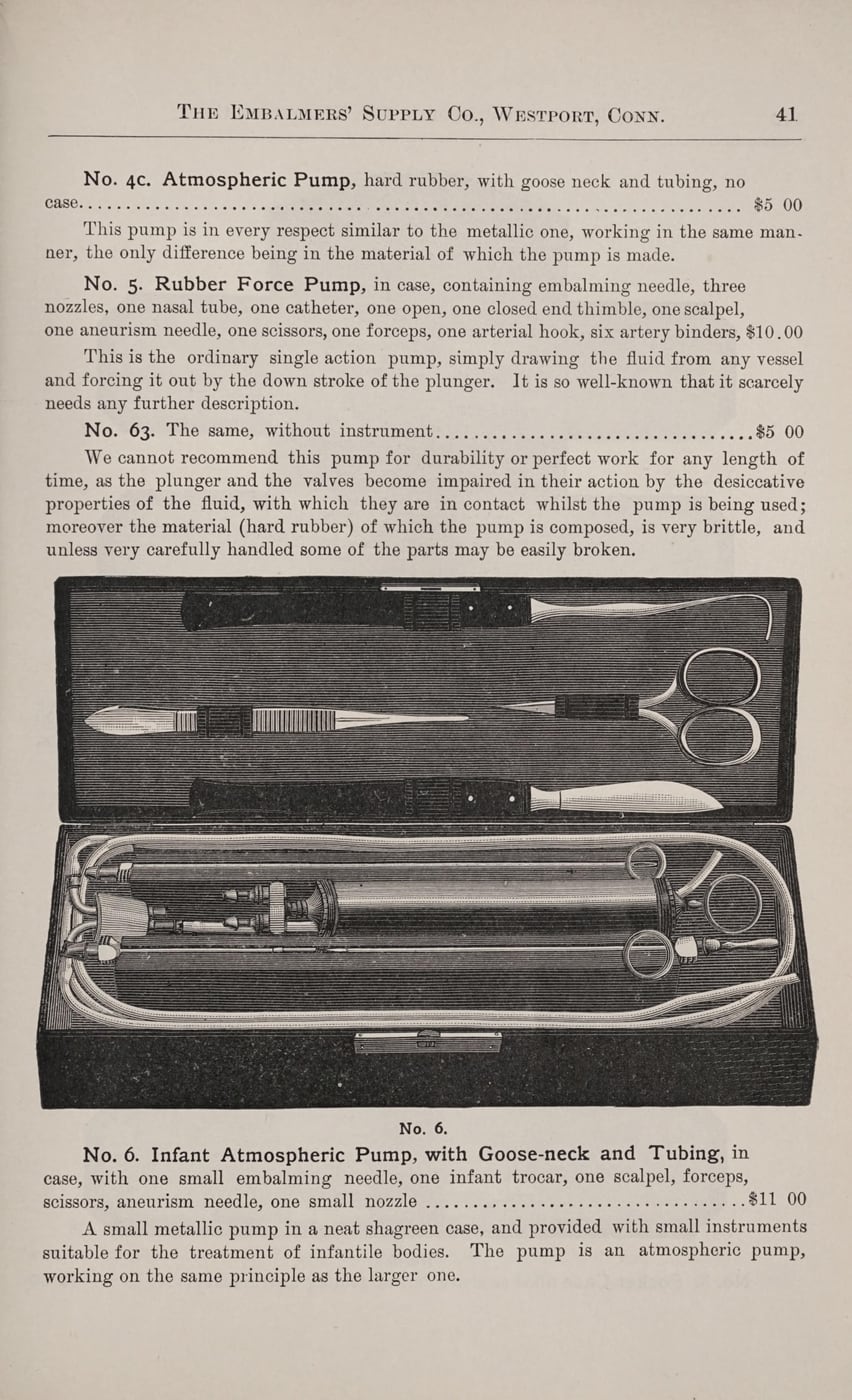
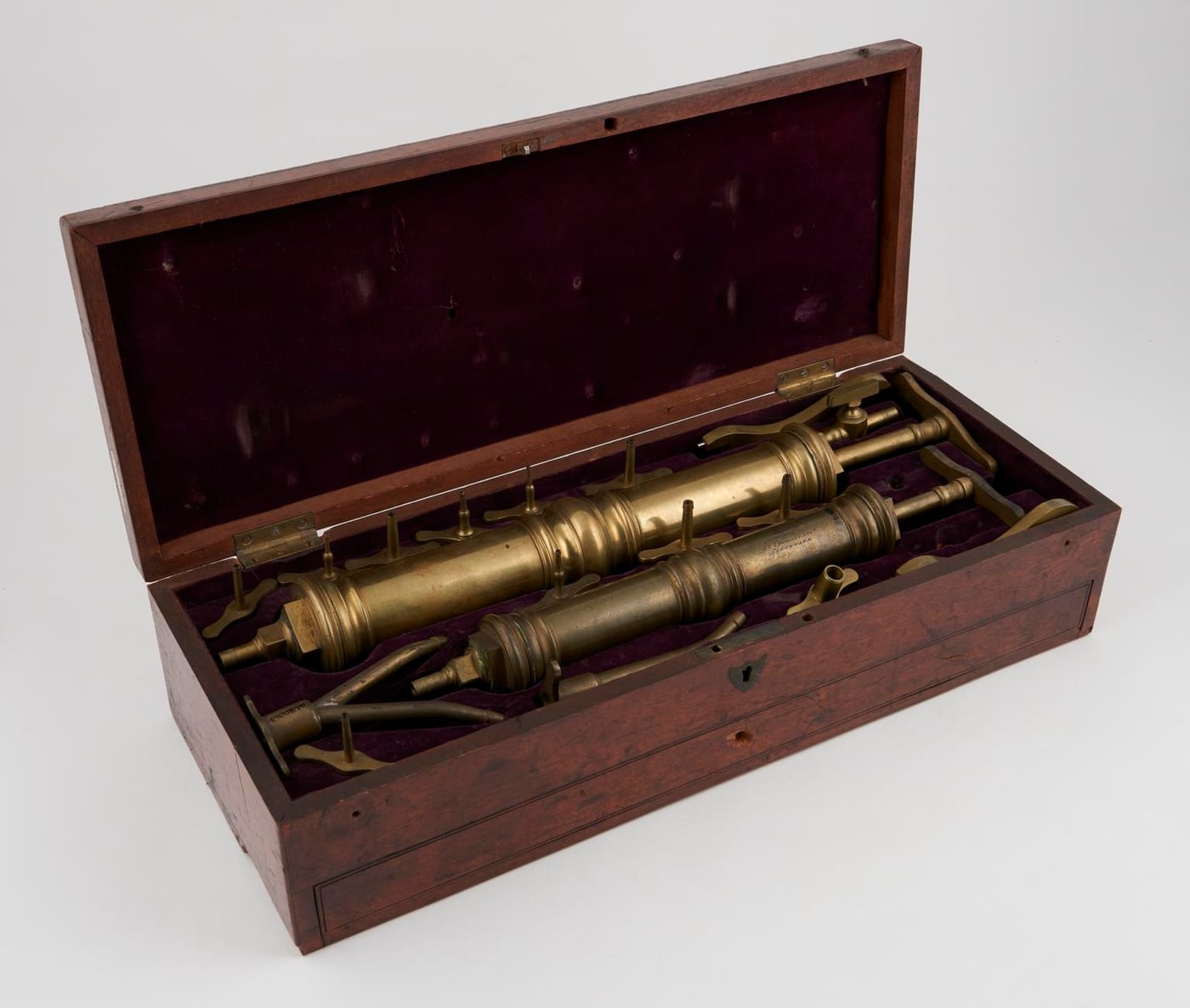
Vol 1 Three Ways to Make Pressure by Hand The bulb syringe, the piston hand pump, and the first continuous-pressure outfits — the three families of manual injection apparatus, and how a collector tells them apart by their form. -
Vol 2 Two Quantities and a One-Way Valve Pressure and rate-of-flow were the two things the trade actually controlled — and the humble check valve is what let a back-and-forth hand stroke deliver fluid in a single direction. Why a squeeze-bulb grows stiffer as it works is a crude gauge hiding in plain sight. -
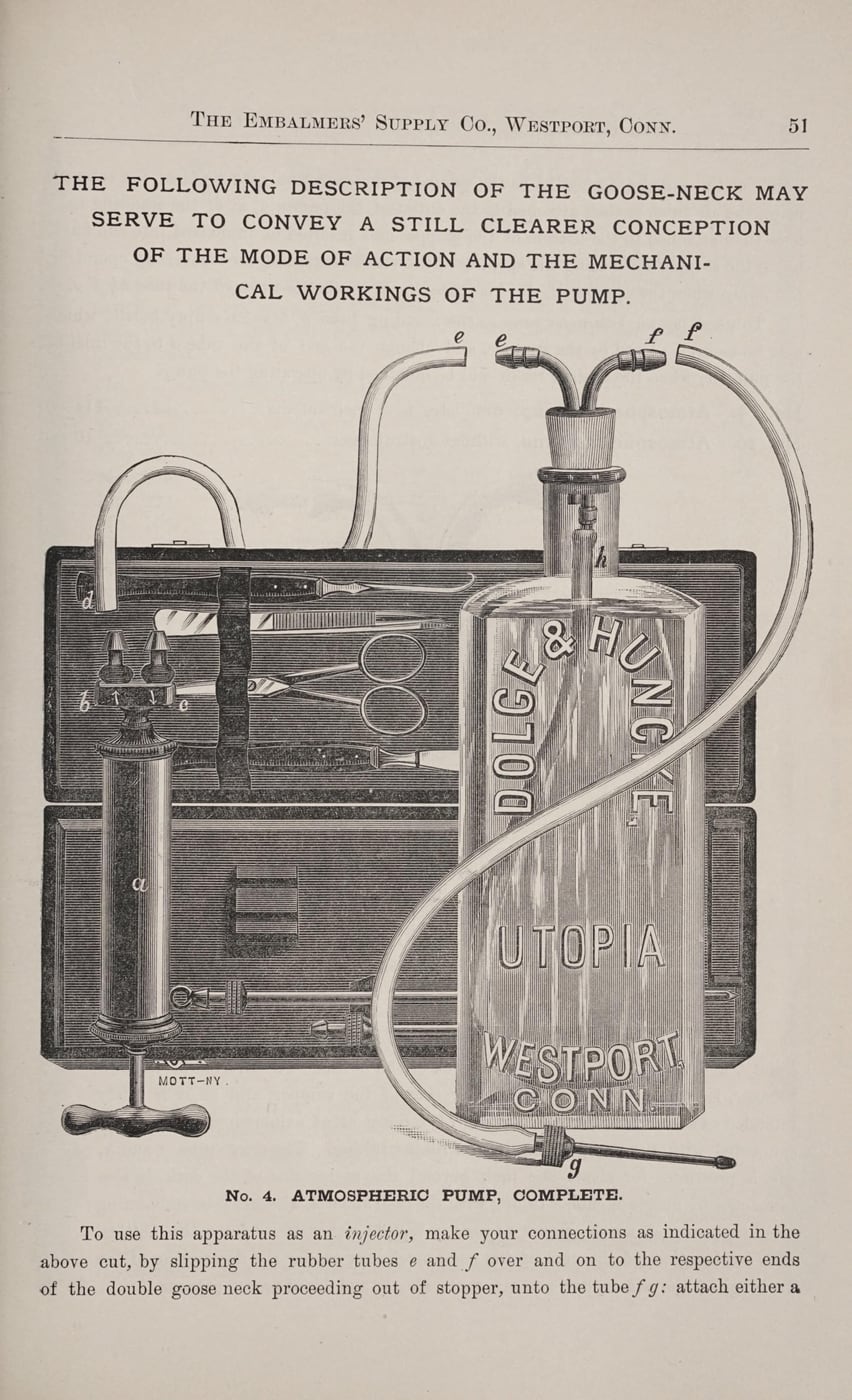
Vol 3 The Supply House and the Trade It Made How two German immigrants in Brooklyn — C. B. Dolge and Max Huncke — turned embalming from an itinerant demonstrator's sideline into a shop-based American industry, and why the Embalmers' Supply Company, its pumps and goosenecks, and its embalming college matter to a collector holding a hand pump today. -
Vol 4 The Patent Trail and Reading the Object How to tell a bulb outfit from a piston pump from a continuous-pressure unit by form alone, and how the drawings filed at the Patent Office trace the slow evolution of the pump and its check valves — read as engineering, not folklore. -
Vol 5 Collecting Hand Pumps and Bulb Outfits How a collector identifies and dates a manual embalming outfit by its materials — rubber bulbs and tubing, brass and nickel bodies, glass reservoirs, ground-glass and bone fittings — grades its condition, documents its provenance, and displays it safely as a hazardous antique.