Search every volume:
Volumes
-
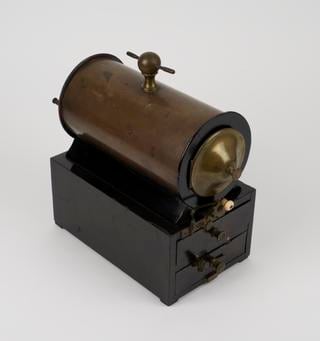
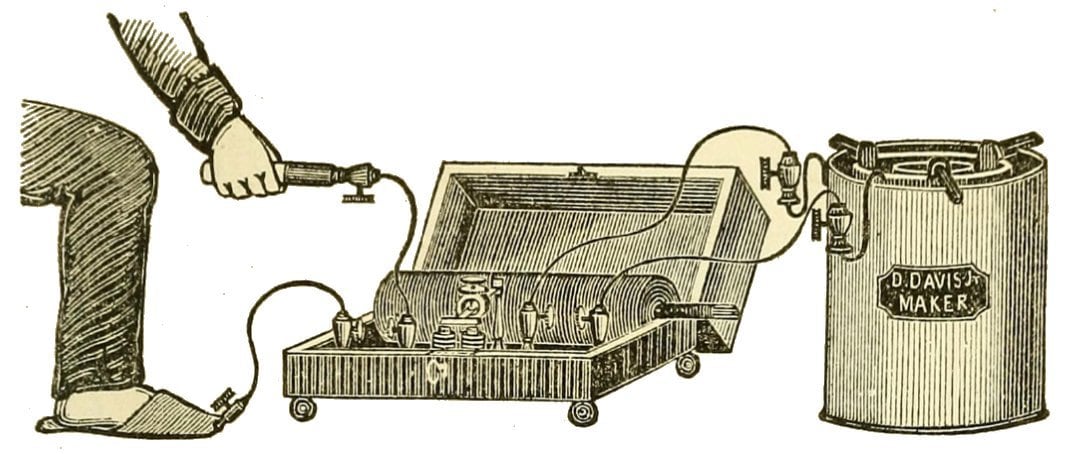
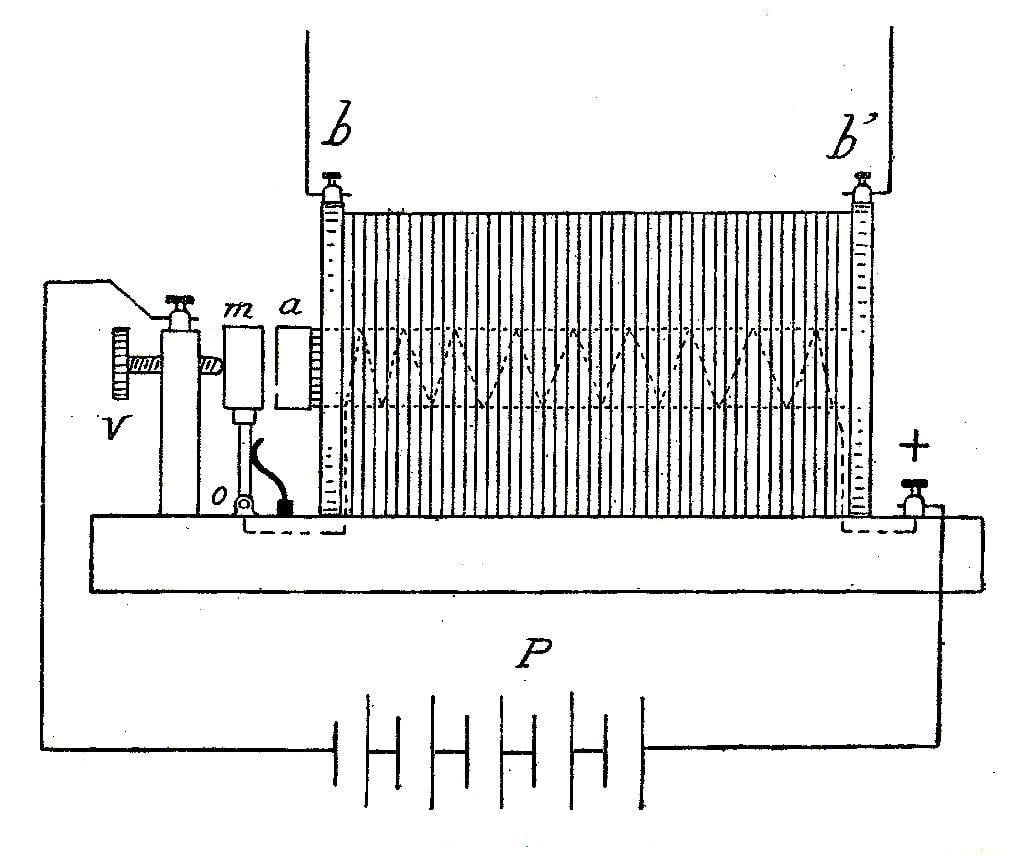
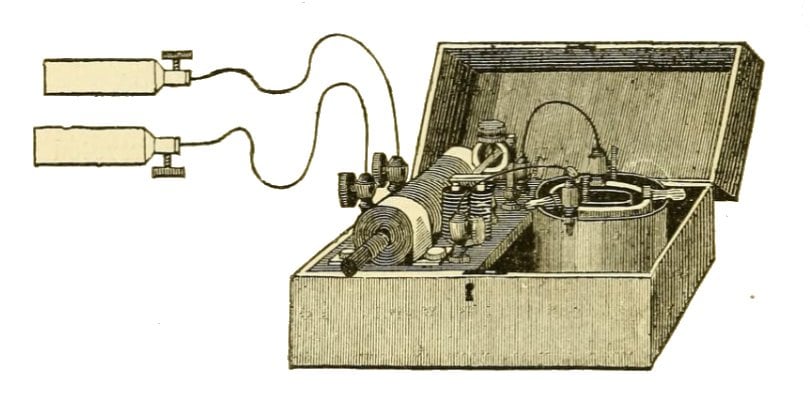
Vol 1 Two Currents in a Fitted Case The steady galvanic current from a chemical cell and the interrupted faradic current from an induction coil — and the mahogany-cased 'medical battery' that a nineteenth-century physician carried to deliver them. -
Vol 2 What the Current Does: Chemistry at the Anode, Twitch at the Nerve Two currents, two entirely different mechanisms — galvanic direct current works by electrochemistry at the electrodes; faradic pulses work by depolarising motor nerves — and each seeded a narrow, real therapy that survives in modern physiotherapy. -
Vol 3 Duchenne and the Living Muscle How Guillaume-Benjamin-Amand Duchenne de Boulogne turned the induction coil into an instrument for reading the body — mapping which muscles a current could twitch or tetanize, arguing the faradic current's case against the galvanic, and helping found the discipline of electrotherapy. The pioneers around him, and the portable medical-battery trade that followed. -
Vol 4 The Ledger and the Carnival Four things a faradic or galvanic current genuinely does to nerve, muscle, and skin — diagnosis, iontophoresis, electrolysis, and muscle re-education — set against the identical cased 'medical battery' sold for nervous exhaustion, impotence, and vigor, and against the same coil bolted into a penny-arcade shock box. -
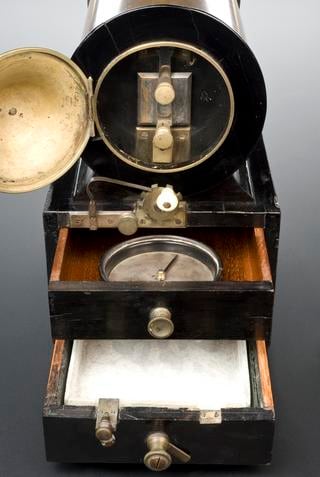
Vol 5 Reading the Case How to open a fitted mahogany 'medical battery' and read its coil, cells, interrupter, and sponge-tipped electrodes; the makers on both sides of the Atlantic; the cues that date a set; and why a surviving one is an object to study and display, not to switch on.