Gravity Injection Systems · Volume 4
Preserved Because Poisonous
The metal-salt fluids — arsenic, zinc, and mercury — that made gravity-injection embalming work, why their preservative power was inseparable from their toxicity, and the long public-health reckoning that banned them and left arsenic in old cemetery soil.
Contents
4.1 About this volume
The three volumes before this one describe a piece of apparatus and the physics that drove it: the elevated glass reservoir, tubing, stopcock, and arterial cannula of the gravity outfit (Vol 1 — The Gravity Outfit and the Hydrostatic Principle); the head-pressure physics that pushed fluid through an artery with nothing but the weight of a raised column (Vol 2 — Head Pressure, Materials, and Survival); and the people who built the American trade, from Gannal and Sucquet to Thomas Holmes on the Civil War battlefields (Vol 3 — Gannal, Sucquet, Holmes, and the Civil War).
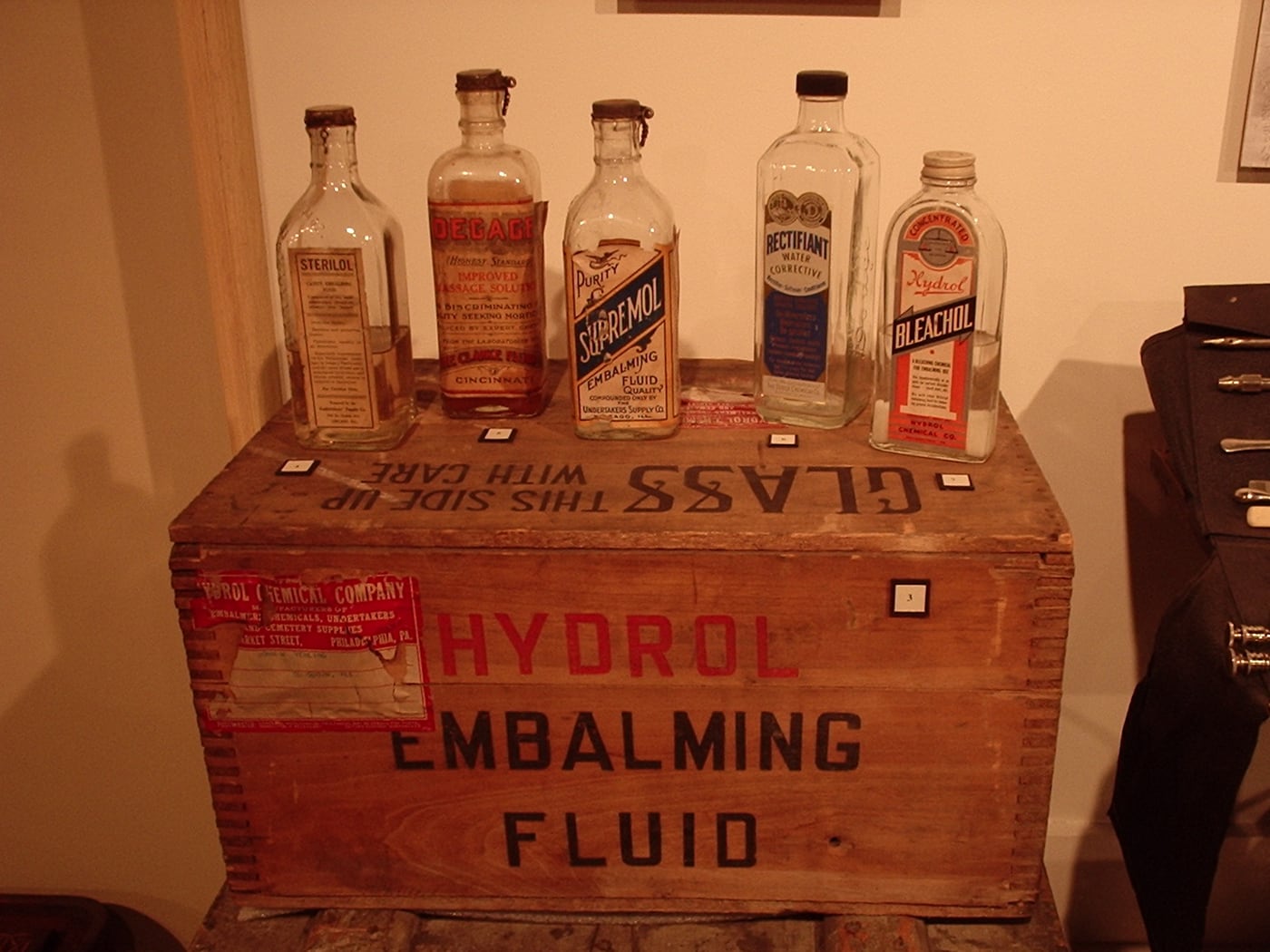
This volume is about what actually went through that apparatus — the fluid — and about a hard fact the trade lived with for half a century: the earliest arterial embalming fluids preserved a body precisely because they were poisons. Arsenic, zinc chloride, and mercuric chloride are protoplasmic toxins; they arrest decay by killing the bacteria and enzymes that drive it, and they do so for the same chemical reason that they are lethal to the living. That single fact organizes the whole story here — the effectiveness, the occupational deaths, the criminal-justice tangle, the state bans, and the surprising legacy the metal salts left in the ground.
A discipline note, because this field is thick with repeated numbers. This is chemistry and public-health history at the level of trade practice; it is not a formulation and contains no working recipe. Where a figure could be pinned to a museum, a government survey, or a peer-reviewed study it is cited as such; where it is a widely-repeated trade-lore number that resists confirmation — the notorious “twelve pounds of arsenic per body,” above all — it is flagged in the prose rather than stated as fact. The arc this volume opens, from toxic metal salts to formaldehyde, is completed in the Electric Embalming Machines dive, where the modern formaldehyde-and-motorized-pump era properly lives.
4.2 The bargain at the heart of early fluid
Return, for a moment, to the physics of Volumes 1 and 2. A gravity outfit is a slow, gentle machine: a bottle raised a few feet drives fluid through the arterial tree at a fraction of a pound per square inch, and pressure only falls as the bottle empties. That gentleness put the entire preservative burden on the chemistry of the fluid, not on any mechanical force. The head of the column merely delivered the liquid; whatever kept the body from putrefying had to be dissolved in it.
Decomposition is driven by two agents: the body’s own digestive enzymes (autolysis) and the vast population of putrefactive bacteria that bloom after death. To stop decay, a fluid has to stop both. The early undertakers reached for the most reliable biocides then known to chemistry — the soluble salts of arsenic, zinc, and mercury. These work by denaturing proteins and poisoning the enzyme systems that all cells, bacterial and human alike, depend on. A metal-salt fluid perfused through the arteries flooded the tissues with a concentration of poison that no microbe could colonize. The corpse was, in effect, rendered chemically uninhabitable.
That was the bargain, and it was a genuinely good one for the narrow purpose the Civil War created: getting a recognizable body home over days or weeks of warm-weather rail transport. But the property that made the fluid work — indiscriminate toxicity to living tissue — was exactly the property that would make it unacceptable. There was no version of an arsenical fluid that preserved without being a poison, because the preservation was the poisoning. Everything that follows turns on that inseparability.
4.3 Three poisons: arsenic, zinc, and mercury
Three metal-salt families dominated the pre-formaldehyde era, often blended together and cut with alcohol, creosote, turpentine, or other agents that added their own antiseptic and deodorizing effect.
Arsenic was the workhorse. The active ingredient was usually arsenous oxide (arsenic trioxide, As₂O₃) — the “arsenious acid” or “white arsenic” of the period formularies — dissolved to make an arsenical solution. From roughly the Civil War through the first decade of the twentieth century, arsenic was the principal preservative in American embalming fluid. It was cheap, effective, and, fatally for later murder investigators, chemically indestructible: arsenic is an element and does not break down.
Zinc chloride is the salt associated with the French chemist J. P. Sucquet, whose method (referenced in Vol 3) injected a zinc-chloride solution arterially. Zinc chloride is strongly astringent and antiseptic; it hardened and preserved tissue and was less acutely toxic to handle than arsenic or mercury, which is part of why it persisted into the transitional period as arsenic fell out of favor. It is a caustic salt, not a benign one, but it does not carry arsenic’s twin problems of extreme human toxicity at low dose and indefinite environmental persistence.
Mercuric chloride — “corrosive sublimate” or “bichloride of mercury” (HgCl₂) — was the third. It is a violent antiseptic and one of the most acutely poisonous mercury compounds, used medically as a disinfectant in exactly this era. As an embalming ingredient it hardened tissue effectively, but it was as dangerous to the operator as arsenic and left mercury, another non-degrading toxic element, in the remains.
These were frequently combined with each other and with organic agents. The mixtures — arsenic, zinc, and mercuric chlorides blended with creosote, turpentine, and alcohol — were, as one museum summary puts it, “effective at slowing decay but dangerously toxic.” There was no clean or safe member of the set: the trade was choosing among poisons.
4.4 How much went into the ground
Quantities are where the folklore is thickest, and where this volume has to be most careful. A commonly cited period formula put roughly four ounces of arsenious acid per gallon of embalming solution — a figure that recurs across secondary accounts and appears traceable to nineteenth-century trade formularies. That concentration, multiplied by the several gallons a full arterial injection might use, already implies a substantial mass of arsenic buried with each embalmed body.
The number that must be flagged, however, is the widely-repeated claim that “up to twelve pounds of arsenic” was used per body. This figure circulates through reputable outlets — the Smithsonian’s coverage attributes it to a cemetery necrogeological study, and it is repeated by the National Museum of Civil War Medicine and several cemetery-history sources — but it should be read as an upper-bound trade-lore figure rather than a typical dose. Twelve pounds of arsenic is an enormous mass; at four ounces per gallon it would imply nearly fifty gallons of fluid, far more than a single injection used. The honest statement is a range: sources describe anywhere “from a few ounces to as much as twelve pounds” per body, which is really a way of saying the practice was unstandardized and the true typical figure is uncertain. What is not uncertain is the direction of the problem: a meaningful, non-trivial mass of an indestructible poison was deposited with each of an unknown but large number of bodies, and — because arsenic does not degrade — essentially all of it is still there.
4.5 The reckoning: why the metal salts were banned
Arsenic left embalming not because a better preservative had fully arrived, but because the poison created two problems the trade and the state could no longer ignore.
The first was occupational. Embalmers, and the anatomists and medical students who dissected embalmed cadavers, were being poisoned by the fluid they worked in and the bodies they handled. The National Museum of Civil War Medicine notes that arsenic-and-soap preservation left “many anatomists” suffering arsenic poisoning; by the turn of the twentieth century, cemetery-history accounts record, “large numbers of embalmers had been poisoned or killed by the toxicity of arsenic.” A preservative that quietly sickened the people who used it was a liability the professionalizing trade could not defend.
The second problem was forensic, and it is the more historically striking. Arsenic was, in the nineteenth century, the classic homicidal poison — the “inheritance powder” of countless real and fictional murders. Toxicologists detected arsenic poisoning by finding arsenic in an exhumed body. But once embalmers were routinely pumping bodies full of arsenic, that test became worthless: a chemist could no longer tell whether the arsenic in a corpse came from a murderer’s dose or from the undertaker’s fluid. Embalming had, in effect, contaminated the crime scene of every poisoning victim. This confounding of arsenic murder investigations is repeatedly cited alongside the occupational hazard as a driver of the bans.
Together these pushed the states to act. It is commonly reported that Michigan was the first U.S. state to ban arsenic in embalming fluid, in 1895, with other states following through the first years of the twentieth century, and that France had prohibited arsenical embalming far earlier, around 1846. These dates should be treated as the standard secondary account rather than as claims this pass could confirm against the original statutes; the Michigan-1895 and France-1846 figures are repeated consistently but were not pinned to primary legislative text here. What is solid is the shape of the change: within roughly a decade on either side of 1900, arsenical embalming fluid went from standard practice to prohibited across much of the United States.
4.6 Arsenic in old cemetery soil
The public-health story did not end when the bans took effect, because the arsenic already in the ground did not go anywhere. This is the metal salts’ strangest legacy, and it is the part of the story best supported by modern science.
Arsenic is an element; it cannot be broken down, metabolized away, or bioremediated. As Columbia University geochemist Benjamin Bostick has put it plainly, arsenic “doesn’t degrade” — it persists indefinitely in soil and groundwater. As a wooden coffin and an embalmed body decompose over decades, and as rainwater percolates through the grave, some of that arsenic is mobilized and leaches into the surrounding soil and shallow groundwater. It then has, in the words of one researcher, to “go somewhere.”
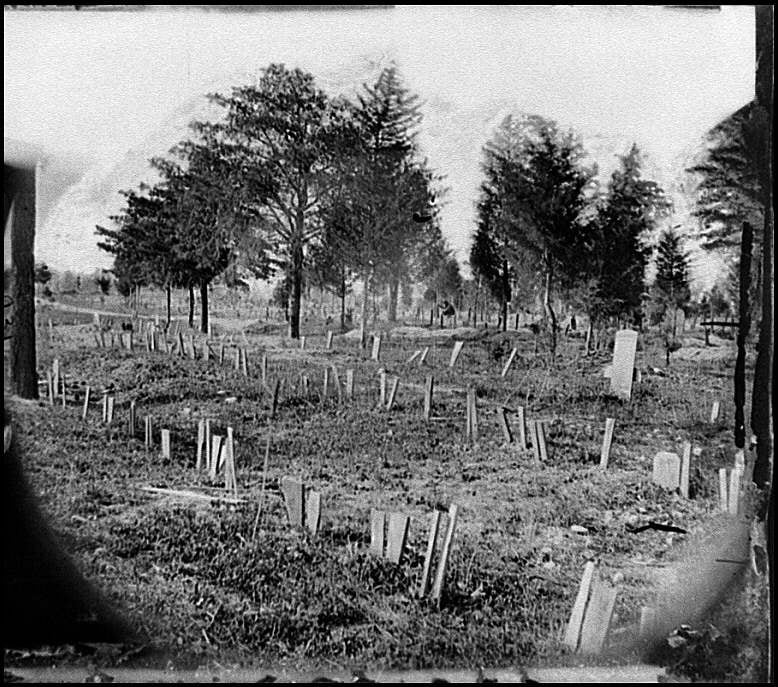
The measurements are real, if geographically scattered. Beginning around 1990, University of Northern Iowa researcher John Konefes (with colleagues including Michael McGee) sampled hand-pump wells on and near Civil War-era graveyards and found that a substantial share — reported as nearly a quarter of the samples across roughly a dozen sites — tested positive for arsenic, some above the drinking-water standards of the day. In 2002, a USGS-sponsored survey near an old cemetery in Iowa City reportedly found arsenic at three times the federal limit (the U.S. drinking-water standard is 10 parts per billion). A separate study of groundwater down-gradient of an 1820s cemetery detected trace arsenic alongside the other early embalming metals — zinc, mercury, and lead.
The honest framing matters here. These are localized, suggestive findings, not proof of a widespread drinking-water crisis. Konefes himself described his 1990 work as limited but strong enough to justify further study, and the effect is easy to confound with naturally occurring arsenic, which is common in some regional geology. The defensible claim is narrow and sober: old cemeteries, especially those in heavy use during the arsenical-embalming decades, are a documented point source of arsenic that can, under the right hydrogeology, reach nearby groundwater — a genuine legacy of the toxic-fluid era, and a reason exhumation and construction on historic burial grounds warrant care.
4.7 The pivot to formaldehyde
The replacement for the metal salts was an organic compound that preserves by a completely different mechanism, and it defines the modern era that the Electric Embalming Machines dive covers.
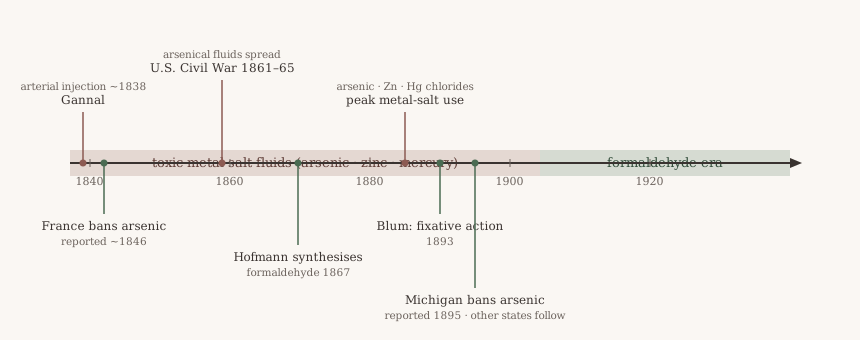
Formaldehyde was first synthesized by the German chemist August Wilhelm von Hofmann in 1867, who produced it by passing methanol vapor over heated platinum. Its decisive property for embalming — that it fixes tissue, cross-linking proteins into a stable, hardened, decay-resistant network rather than simply poisoning microbes — was identified in 1893 by the German physician Ferdinand Blum, who noticed the tissue-hardening effect while testing formaldehyde as an antiseptic. Commercial formaldehyde production had grown through the 1880s, and by the 1890s and early 1900s the funeral trade in the United States, Germany, France, and Belgium was adopting it as its principal preservative — a shift that coincided neatly with the state bans pushing arsenic out.
Formaldehyde was not chosen because it was safe — it is an irritant and a recognized carcinogen, and modern embalming has its own occupational-health literature. It was chosen because it preserved better and differently: it fixed tissue chemically instead of relying on a metal poison, it was not the indestructible element arsenic was, and it did not sabotage arsenic-poisoning investigations or leave a permanent metallic burden in the soil. The move from arsenic to formaldehyde is the pivot on which the chemical history of embalming turns — from preservation by poisoning to preservation by fixation — and it is inseparable, chronologically and commercially, from the hand pump and then the electric machine that replaced the slow gravity outfit.
The contrast with the collection’s quackery is instructive: where the Radioactive Cures dive in the Quack Devices wing shows a dangerous substance sold as beneficial, the arsenical-fluid story shows a dangerous substance that actually worked for its stated purpose — and had to be abandoned anyway, because working and being safe were, in this case, two different things.
4.8 Where this volume hands off
This volume has followed the fluid rather than the apparatus: the metal-salt poisons that made gravity injection effective, the reckoning that banned them, and the arsenic they left in the ground. The final volume of this dive, Vol 5 — Collecting, Dating, and Displaying Gravity Rigs, returns to the object in the collector’s hands — how to recognize a gravity outfit, read its condition and provenance (graduated glass survives; rubber tubing perishes), and display one safely. That safety framing draws directly on this volume: a genuine antique gravity bottle may carry the dried residue of arsenical fluid, and old fluid or sediment in surviving rigs is a hazardous-materials concern, not a curiosity to handle casually.
The chemical arc opened here — from arsenic, zinc, and mercury to formaldehyde — is carried to its conclusion in the Electric Embalming Machines dive, where the motorized pump and the formaldehyde fixative together define modern arterial embalming. Read that dive for how the chemistry this volume began ends.
Sources
- Embalming and the Civil War — National Museum of Civil War Medicine — arsenic as the primary Civil War preservative, arsenic-and-soap preparation, anatomists suffering arsenic poisoning, and the Gannal 1838 arterial-injection antecedent; Holmes’s pricing and volume context.
- Arsenic and Old Graves: Civil War-Era Cemeteries May Be Leaking Toxins — Smithsonian Magazine — four ounces of arsenious acid per gallon; the “up to twelve pounds per body” upper-bound figure; Benjamin Bostick (Columbia) on arsenic not degrading; the early-1900s ban and its dual (medical-student poisoning and murder-investigation) rationale; the 2002 USGS Iowa City survey at three times the federal 10-ppb limit.
- Arsenic and Old Cemeteries — The Woodlands (Philadelphia) — the few-ounces-to-twelve-pounds range; turn-of-century embalmer poisonings driving the ban; the Era Formulary trade-publication context; Hamilton College (Clinton, NY) and University of Pennsylvania groundwater testing; the transition to formaldehyde.
- Old cemeteries, arsenic, and health safety — Konefes & McGee (via Semantic Scholar) and Smithsonian’s account of the 1990 Konefes well-sampling — the ~1990 University of Northern Iowa study; ~one-quarter of hand-pump-well samples across ~a dozen sites testing positive for arsenic; Konefes’s own “limited but warrants further study” framing.
- Embalming chemicals — Wikipedia — arsenic-based Holmes fluid; modern formaldehyde/glutaraldehyde/methanol formulations and the protein cross-linking (fixation) mechanism; early fluid-manufacturer chronology.
- History of Formaldehyde — Formacare and August Wilhelm von Hofmann — Britannica — Hofmann’s 1867 synthesis of formaldehyde over heated platinum; commercial production growth in the 1880s and spread to the US, Belgium, and France by the early 1900s for embalming and preservation.
- Ferdinand Blum, formaldehyde fixation (1893) — via history-of-embalming and histology accounts — Blum’s 1893 accidental discovery of formaldehyde’s tissue-fixative/hardening action while testing it as an antiseptic; the basis of the shift from poison-based to fixation-based preservation.
- Modern Embalming — Clements Library, University of Michigan — trade-history context for the arsenic-to-formaldehyde transition and the professionalization of American undertaking (consulted for framing; page returned access errors on this pass and is cited for context only).
Comments (0)