Quack Devices · Volume 1
The Golden Age of Medical Fraud
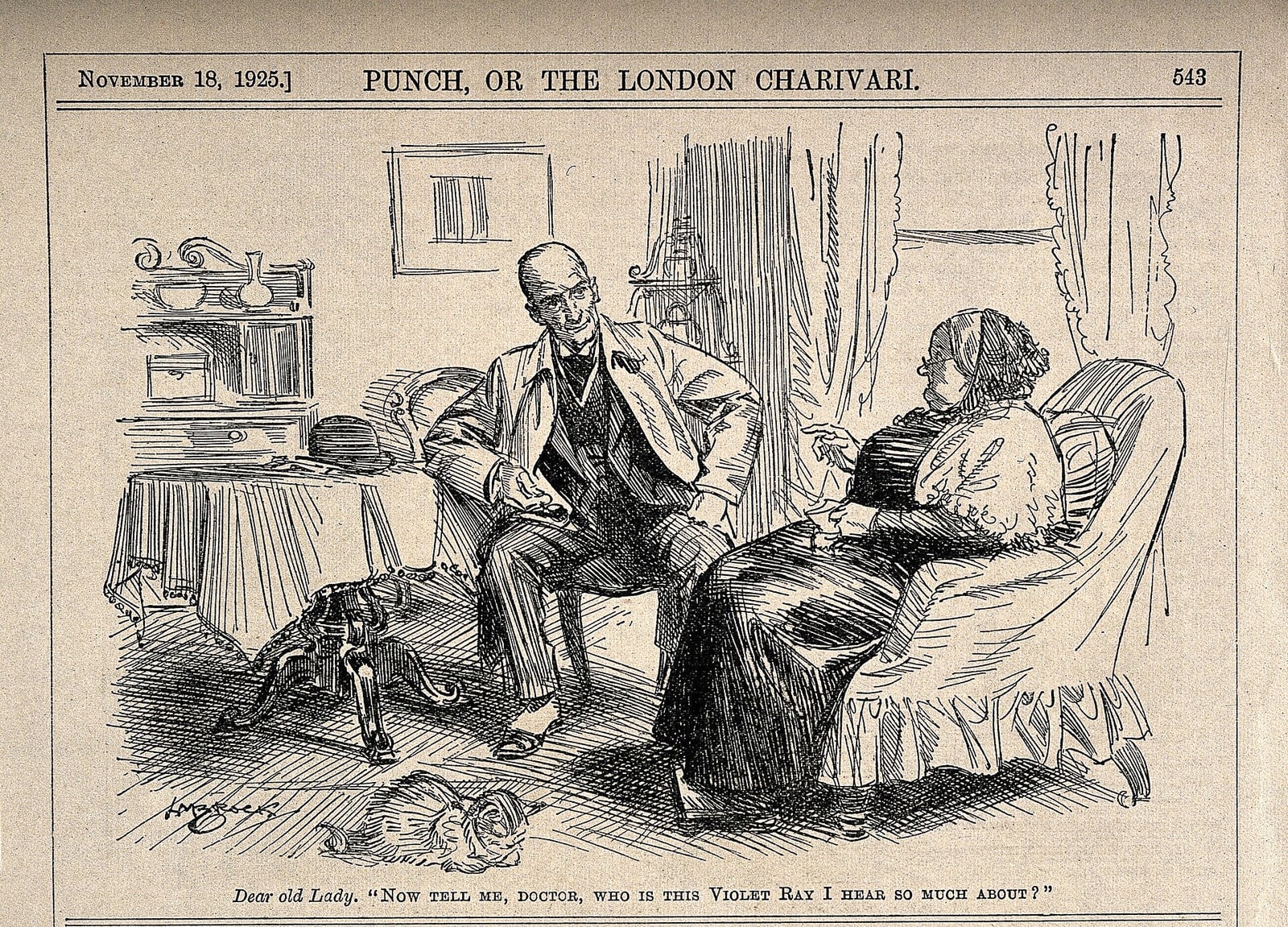
1.1 A cure for everything, sold to everyone
For roughly sixty years — from the 1880s into the 1940s — an ordinary person could walk into a drugstore, open a mail-order catalog, or answer a knock at the door and buy a machine that promised to cure almost anything. A glowing glass wand for baldness and cancer alike. A belt that passed a faint tingle across the kidneys and claimed to restore “lost manhood.” A sealed box that would diagnose your disease from a drop of dried blood mailed in an envelope. A crock that made your drinking water radioactive, sold as a tonic. A lamp that shone colored light on the naked body to “balance” it.
These devices were not sold from the shadows. They were advertised in respectable newspapers, demonstrated at fairs, endorsed by testimonials, and housed in fitted velvet-lined cases that looked exactly like legitimate medical instruments — because, in that era, the legitimate instruments often looked no more plausible. This is the wing’s founding question: not “how were people so gullible,” but the harder and more interesting one — why was this believable? The answer is that the golden age of medical fraud was also a genuine golden age of science, and for a few decades the public had no reliable way to tell the two apart.
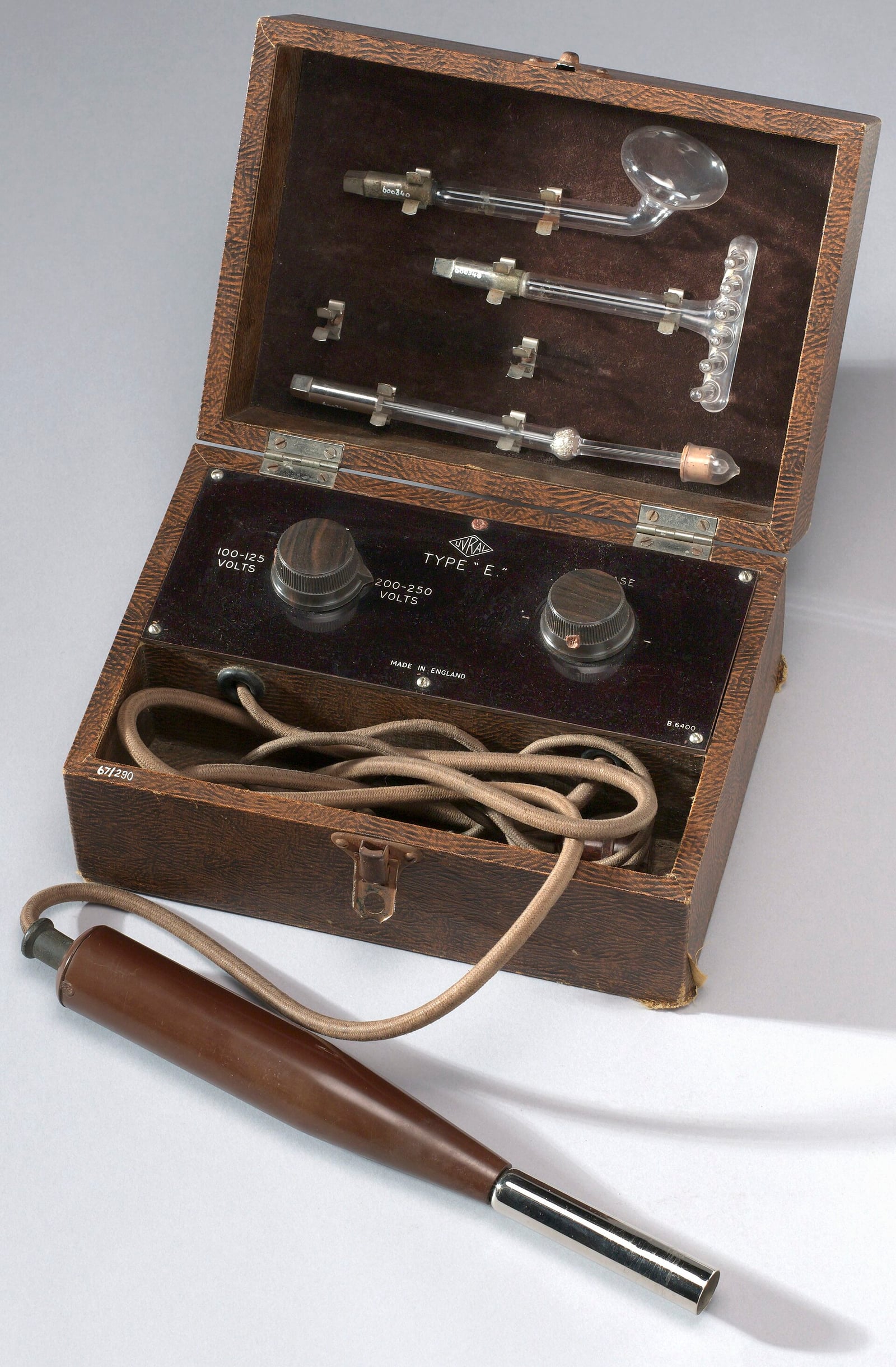
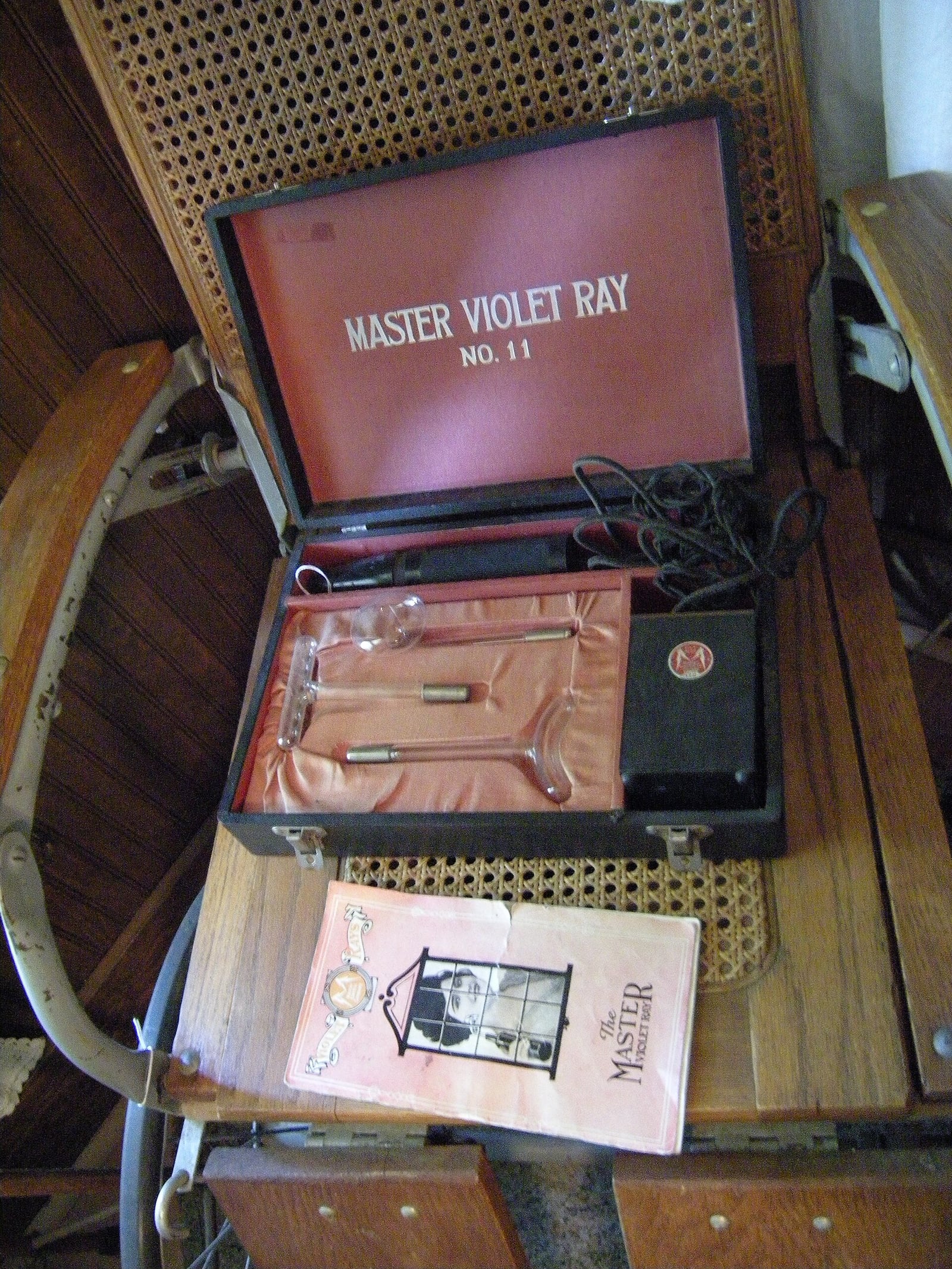
1.2 Two revolutions the public could not tell apart
The devices in this wing rode on the credibility of two real revolutions that happened to arrive at almost the same moment.
The first was electrification. Thomas Edison’s Pearl Street generating station opened in Manhattan in 1882; over the following two decades electric light, the telephone, the streetcar, and eventually radio moved from marvel to municipal fixture. To a person who remembered candlelight, electricity genuinely was an invisible, powerful force that could be piped through a wire and made to do work — light, heat, motion, sound over distance. If an unseen current could carry a human voice across a continent, why should it not carry health into a diseased organ? The claim was absurd, but it was absurd in exactly the direction that the age’s real wonders pointed.
The second was germ theory. Louis Pasteur (1822–1895) and Robert Koch (1843–1910) established, across the 1870s and 1880s, that specific microscopic organisms cause specific diseases. Koch identified the tuberculosis bacillus in 1882 and the cholera organism the following year; Pasteur produced the first laboratory vaccines, culminating in the rabies vaccine of 1885 (Britannica; Encyclopædia entries on germ theory). This too was invisible, counterintuitive, and — crucially — newly true. Educated authorities had spent a generation insisting disease came from “bad air” and imbalanced humors, and now they had abruptly reversed themselves and were right. A public asked to believe in invisible germs had every reason to believe in invisible cures.
The two revolutions reinforced one another. Both said the important forces in nature were unseen. Both were delivered by men in white coats using apparatus the layman could not evaluate. And both were, at the popular level, matters of authority and demonstration rather than understanding. When the mechanism of belief is “an expert showed me something I could not explain,” the door stands open to anyone who can stage a convincing demonstration.
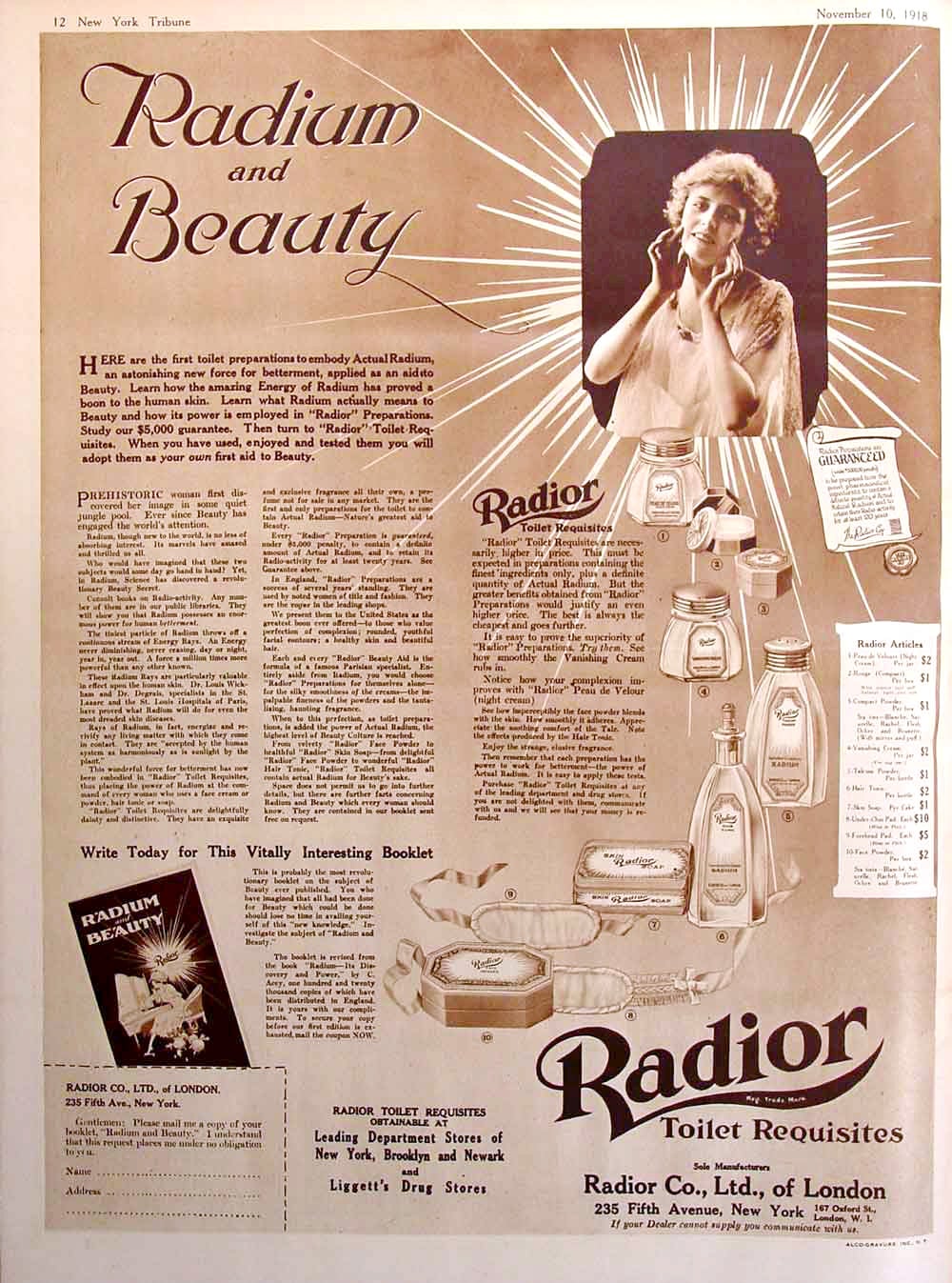
1.3 Why a “ray” was believable
The single most important fact about this period is that authentic science kept producing results the public could not distinguish from the imitations. Wilhelm Röntgen’s X-rays (1895) let physicians photograph the living skeleton. Henri Becquerel and the Curies discovered radioactivity (1896 onward) — matter that emitted energy from nothing anyone could see. Guglielmo Marconi sent signals across the Atlantic without wires (1901). Niels Finsen won a Nobel Prize (1903) for treating skin tuberculosis with concentrated ultraviolet light — a real light therapy that genuinely worked.
Every one of these breakthroughs was invisible, was named for a “ray” or an “emanation” or a “wave,” and worked by a mechanism the ordinary buyer took entirely on faith. So when a salesman offered a device delivering a therapeutic “ray,” an “attuned color wave,” a “vibratory rate,” or a bottle of healthful “radioactivity,” he was not asking the public to believe something science had ruled out. He was asking them to believe something that sounded exactly like what science had just ruled in — and the public, reasonably, could not tell that the salesman’s ray was counterfeit and Finsen’s was real. The counterfeits parasitized the vocabulary of the genuine article. A violet-ray wand borrowed its name to blur its harmless gas-discharge glow with legitimate ultraviolet therapy; radioactive “cures” borrowed the prestige of the Curies; Spectro-Chrome borrowed the reality of phototherapy; Abrams’ radionics boxes borrowed the mystique of radio.
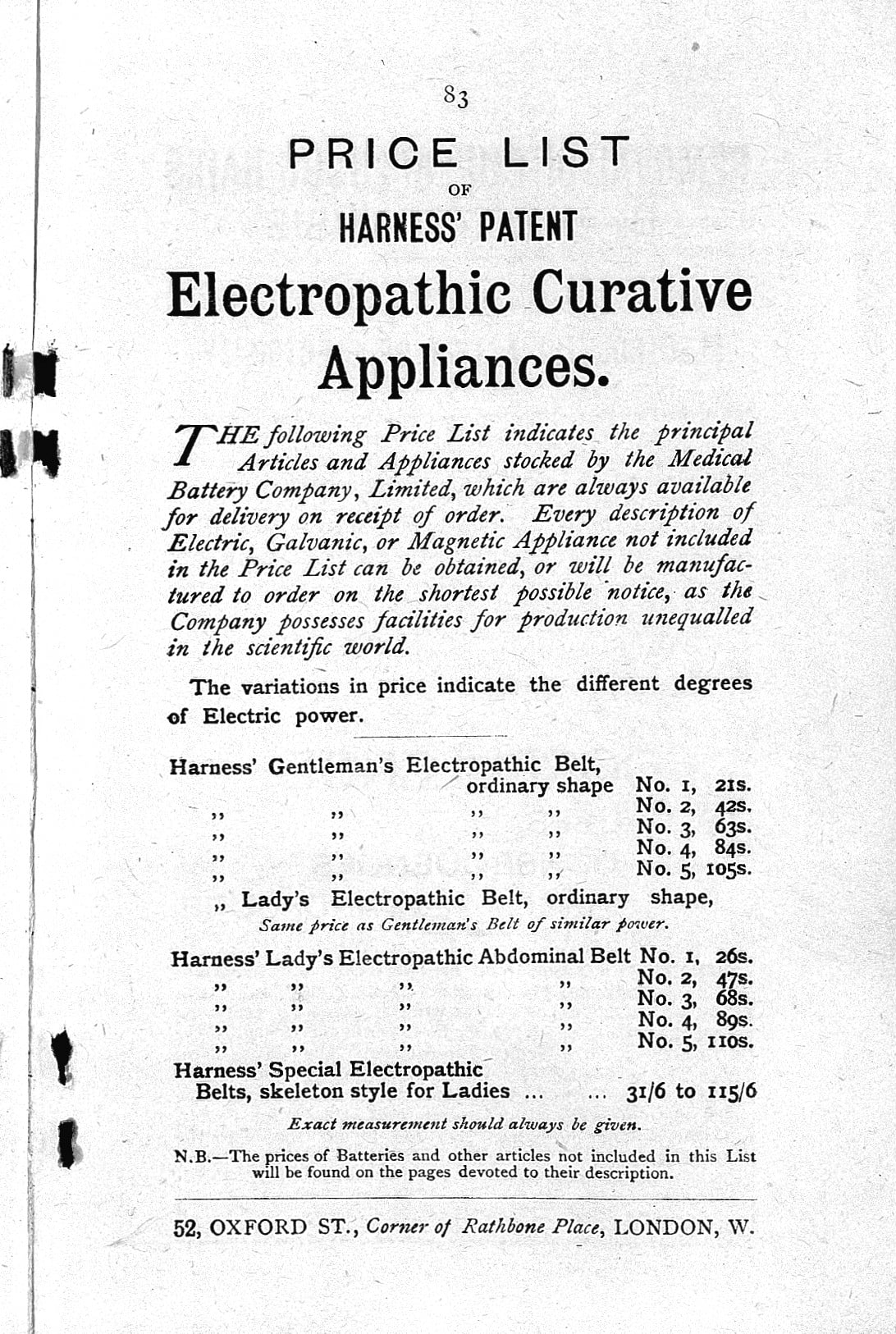
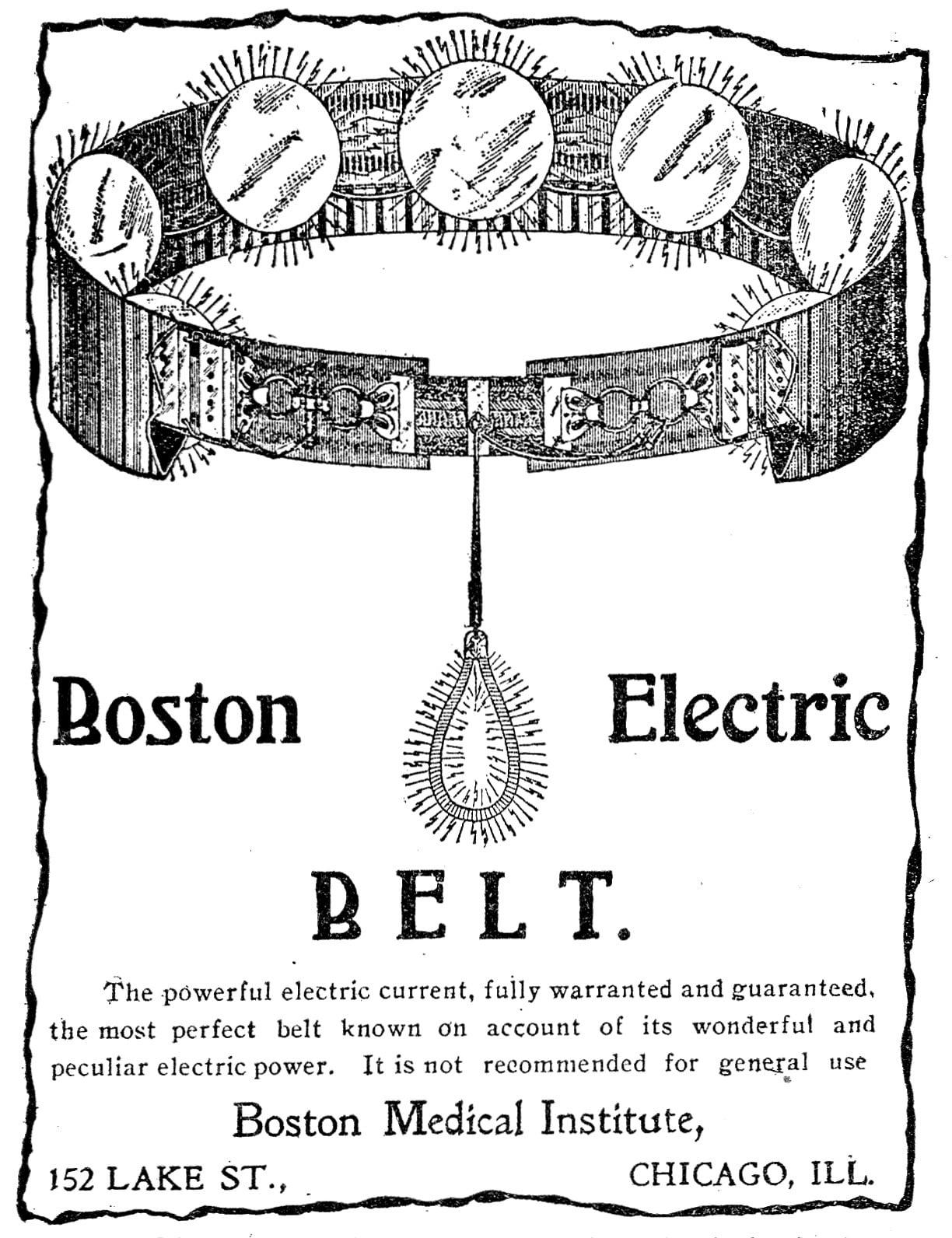
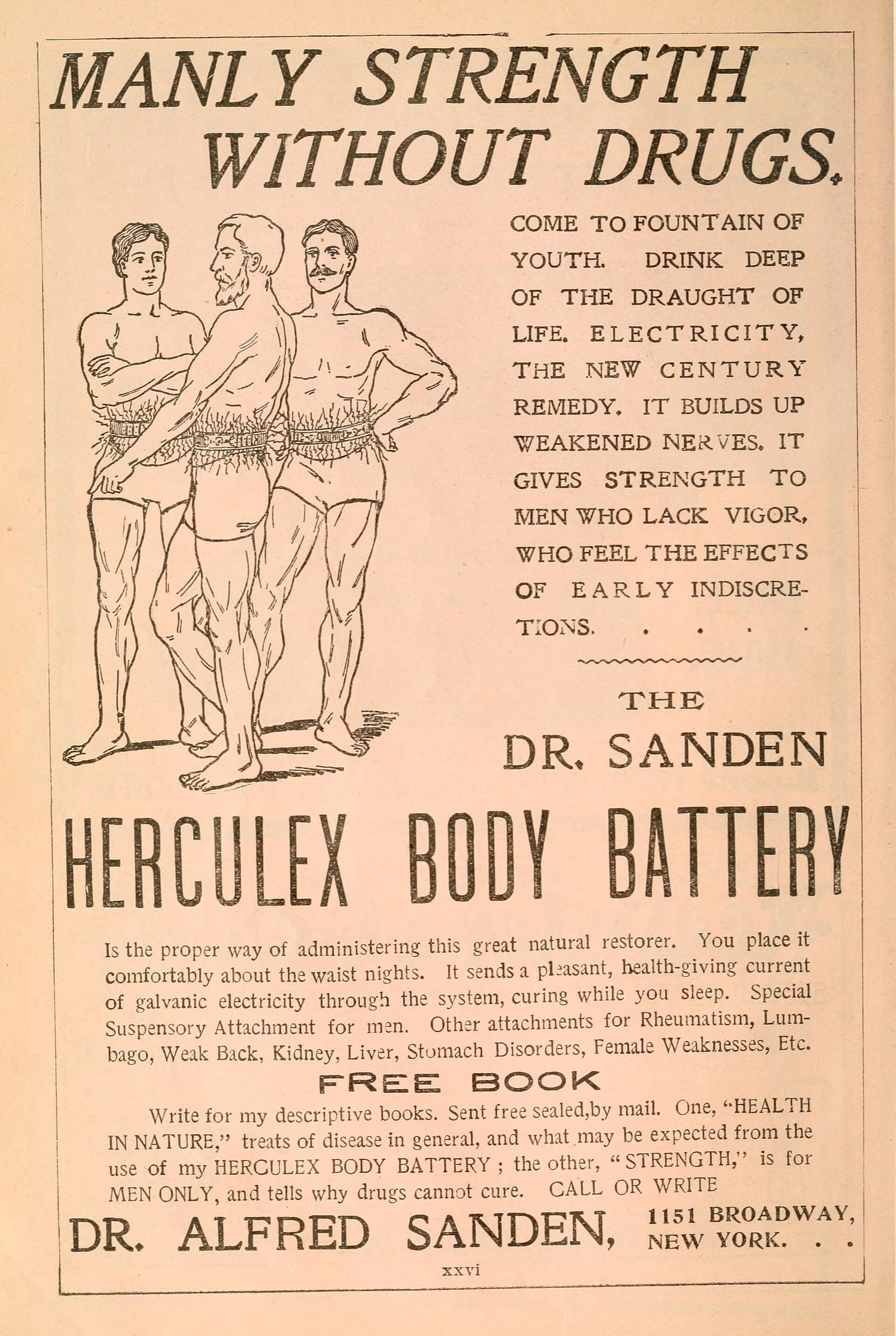
The boundary was not merely blurry in the public mind; it was genuinely porous in the profession itself. Reputable physicians of the 1880s and 1890s used static influence machines for “Franklinization” and faradic coils to stimulate muscle, and by the early twentieth century some used high-frequency d’Arsonval currents with real, if narrow, therapeutic intent. A galvanic electropathic belt was, for a brief window in the 1880s, something a doctor might actually recommend — before the profession moved on and the belt became the very emblem of the quack (New York Almanack; University of Western Ontario, Electrotherapy, Phototherapy and Quackery). The line between medicine and fraud in this field was not a wall. It was a moving front, and the quack devices lived on whichever side of it the public had not yet learned to distrust.
1.4 From patent medicine to patent device
The devices did not appear from nowhere. They inherited a trade. Through the nineteenth century the dominant form of self-medication was the patent medicine — a branded, secret-formula bottle sold over the counter with extravagant promises. The name is itself a fossil of misdirection: it descends from the English “letters patent,” a royal endorsement granting a monopoly, and by the American nineteenth century was a misnomer. Almost none of these nostrums were actually patented, because a patent would have required publicly disclosing the ingredients the maker most wanted to hide (chemical patents were not even in general U.S. use until the 1920s). They were proprietary, not patented — secret formulas, frequently laced with alcohol, opium, or cocaine (Wikipedia, “Patent medicine”; Duke University Libraries; Hagley Museum).
This was enormous business. By the turn of the century patent-medicine sales are commonly put around $80 million a year, and the category was a leading account for the major advertising agencies — the top account for the Philadelphia firm N. W. Ayer in 1878, at some 26 percent of its revenue, and still a leading one at 15 percent in 1900 (Hagley Museum; Smithsonian NMAH, Balm of America). The nostrum trade essentially built the modern advertising industry.
What changed the shape of the whole category was regulation aimed at the bottle. Muckraking exposés — most famously Samuel Hopkins Adams’s series “The Great American Fraud,” eleven articles in Collier’s Weekly running from October 1905 into 1906 — named the poisons and the lies in print (PMC biography of Adams; Spartacus Educational). The resulting Pure Food and Drugs Act of 1906, signed by Theodore Roosevelt, attacked misbranding and adulteration and forced makers to disclose dangerous ingredients on the label (Britannica; FDA history). The later 1938 Federal Food, Drug, and Cosmetic Act went further and required proof of safety before a new drug could be sold.
For the pseudo-medical trade, the lesson of this tightening net was strategic: stop selling something you can put in a bottle. A medicine has ingredients a government chemist can name, measure, and prosecute. A device has no ingredients. There is nothing to analyze in a laboratory, no formula to disclose, no dose to mislabel. A machine can be reused indefinitely — one sale, an endless supply of “treatments.” And best of all, an electrical or radioactive device wore the very aura of scientific modernity the age was primed to trust. The transition from patent medicines to patent devices is, in large part, the story of fraud migrating into the one product category the regulators had not yet caught up to. (The strong causal version of this claim — that regulation of drugs directly drove the device boom — deserves care; the shift also simply followed where the exciting new science was.)
1.5 A thin and porous regulatory state
The devices flourished because the state that might have stopped them was, for most of this period, barely equipped to try. The 1906 Act covered food and drugs — not devices at all. A machine that made no ingestible claim fell entirely outside it. Federal authority over medical devices did not exist in any real form until the 1938 Act finally brought devices (and cosmetics) under the Food and Drug Administration — and even then the power was thin, aimed mainly at policing false labeling rather than testing whether a device did anything. Devices would not be seriously regulated for safety and effectiveness until the Medical Device Amendments of 1976, signed by President Ford, which first sorted devices into risk classes and required premarket review of the most dangerous (FDA, Part II: 1938 Food, Drug, and Cosmetic Act; FDA, “Fifty Years of the Medical Device Amendments”). For the entire golden age of the objects in this wing, in other words, the federal government’s device authority ranged from nonexistent to feeble.
Into that vacuum stepped two imperfect substitutes. The first was the U.S. Post Office, whose fraud-order power — rooted in the mail-fraud statute of 1872 — let it bar a scheme from using the mails, a real weapon against a trade that lived by mail order (U.S. Postal Inspection Service history). The second was organized medicine itself. The American Medical Association built a Propaganda for Reform Department (later the Bureau of Investigation) under Arthur J. Cramp beginning in 1906; its investigations, its testing laboratory, and its multi-volume compendium Nostrums and Quackery (1911, 1921, 1936) became the era’s great archive of medical fraud — the Historical Health Fraud collection that survives today (Wikipedia, “Arthur J. Cramp”; AMA history). These mechanisms mattered, but they were reactive, slow, and case-by-case. A device driven out of one state, or off the mails under one name, could reappear under another. The reckoning that actually ended the trade is the subject of a later volume; the point here is that for its heyday, the category faced no gatekeeper capable of asking the one fatal question — does this thing work?
1.6 The promise the whole category sold
Strip away the electrodes, the radium, the colored glass, and the dials, and every device in this wing sold the same underlying promise, in three parts.
First, a universal cure. The disease lists are almost comically alike across otherwise unrelated machines: rheumatism, “nervous debility” and neurasthenia, impotence and “lost vitality,” deafness, skin disease, kidney and liver complaints, constipation, and — always, eventually — cancer. A device that treats everything is the signature of a device that treats nothing, because real therapies are specific. But to a buyer without a diagnosis, universality read as power.
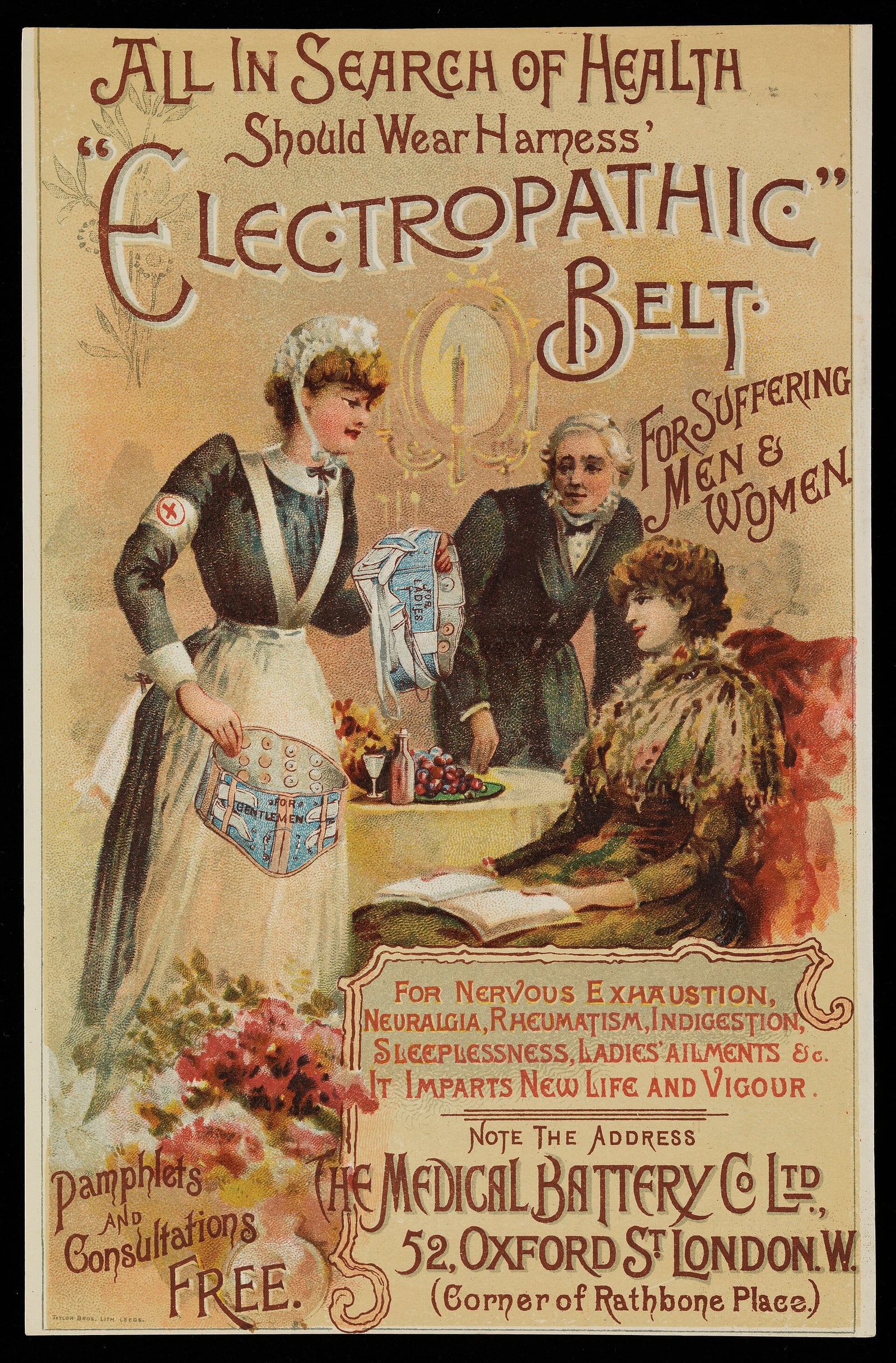
Second, a single hidden force behind all health — electricity, “vibration,” radioactive energy, colored light, “nerve vigor.” Restore the force and you restore the body; the machine was simply the tap. This is vitalism in modern dress, and it let one gadget stand in for the entire practice of medicine.
Third, self-administration without a doctor — treatment you controlled, at home, privately, on your own schedule. That was the commercial engine. It flattered the customer’s autonomy, sidestepped the physician who might say no, and, for the sexual and “nervous” complaints these devices so often targeted, spared an embarrassing conversation.
It is worth stating plainly, because it is the discipline of this whole wing: with the tragic exception of the radioactive products, which delivered a genuine and sometimes fatal dose of ionizing radiation, most of these devices were physically incapable of doing what they claimed. Their real effects were marginal and mundane — a warm tingle, a mild skin irritation, the smell of ozone, the honest but limited benefit of passive exercise and massage, and, above all, the powerful and genuine relief of the placebo response. The machines worked on belief. The following volumes take each family in turn — how it pretended to work, who built and sold it, and how, at last, it was brought down.
Sources
- Britannica — Pure Food and Drug Act
- Samuel Hopkins Adams (1871–1958): Journalist and Muckraker — PMC
- Spartacus Educational — Samuel Hopkins Adams
- Wikipedia — Patent medicine
- Duke University Libraries — Palatable Poisons: The Dark History of Patent Medicine
- Hagley Museum — History of Patent Medicine / Advertising and Branding
- Smithsonian NMAH — Balm of America: Patent Medicine Collection, History
- Britannica — Germ theory
- World History Encyclopedia — Germ Theory
- New York Almanack — Electropathic Cure: Quackery in the Electric Era
- University of Western Ontario — Electrotherapy, Phototherapy and Quackery
- AMA Journal of Ethics — How Pseudoscience Generated US Material and Device Regulations
- FDA — Part II: 1938, Food, Drug, Cosmetic Act
- FDA — Fifty Years of the Medical Device Amendments
- FDA — The Sulfanilamide Disaster (FDA Consumer, 1981)
- Wikipedia — Arthur J. Cramp
- American Medical Association — AMA history
- U.S. Postal Inspection Service — History of the Mail Fraud Statute
Comments (0)