Embalming Machines · Volume 2
The Chemistry of Preservation
Arterial embalming is, at bottom, a chemistry problem dressed in the clothes of a trade. The apparatus dives in this wing — the gravity outfits that ran on nothing but the weight of a raised bottle, and the electric machines that later held pressure and rate on a gauge — all exist to do one thing: distribute a preservative solution through the vascular tree. What that solution does once it arrives, and what it was made of across the century between the Civil War and the modern prep room, is a story with two very different chemistries and two very different public-health legacies. This volume tells it as chemistry and public health only — how a fluid arrests decomposition in principle, and the real environmental and forensic consequences of the first century of getting it wrong. Nothing here is technique.
2.1 What “Preservation” Means in Chemistry
A body left to itself decomposes by two overlapping processes: autolysis, in which the cell’s own enzymes break down its structures once the systems that regulated them stop, and putrefaction, in which bacteria — many of them already resident in the gut — consume tissue and release the gases and acids of decay. Both are catalytic, and both are relentlessly biochemical: enzymes and microbes are molecular machines, and they only work on proteins whose shapes they can recognize and cleave.
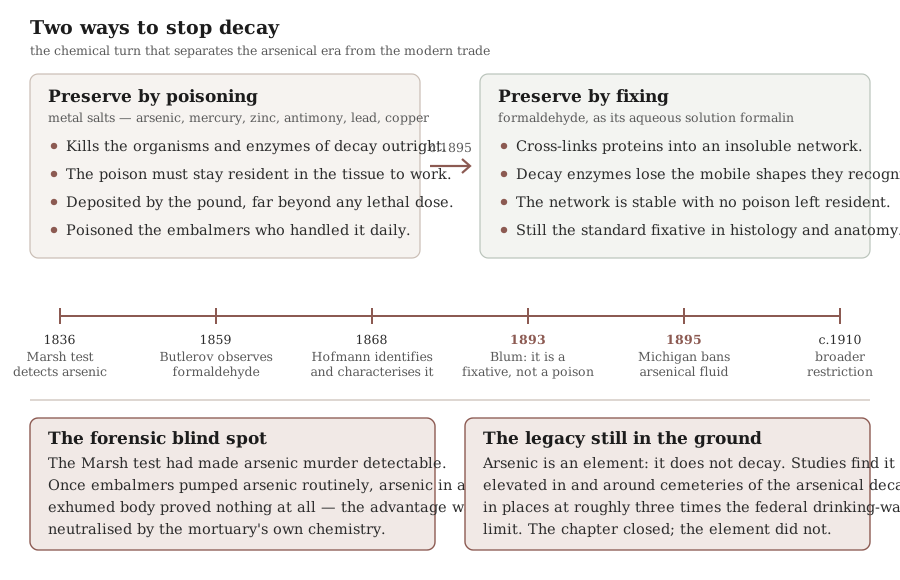
Preservation, in principle, is the business of taking those proteins out of play. There are two broad ways to do it. A poison kills the bacteria and denatures the enzymes by general toxicity — it shuts the machinery down. A fixative goes further: it chemically bonds proteins to one another so that their shapes are locked, insoluble, and no longer recognizable as food or substrate. The nineteenth century tried the first approach and the twentieth adopted the second, and the difference between them is the difference between a graveyard that leaches arsenic for a century and a prep room that does not.
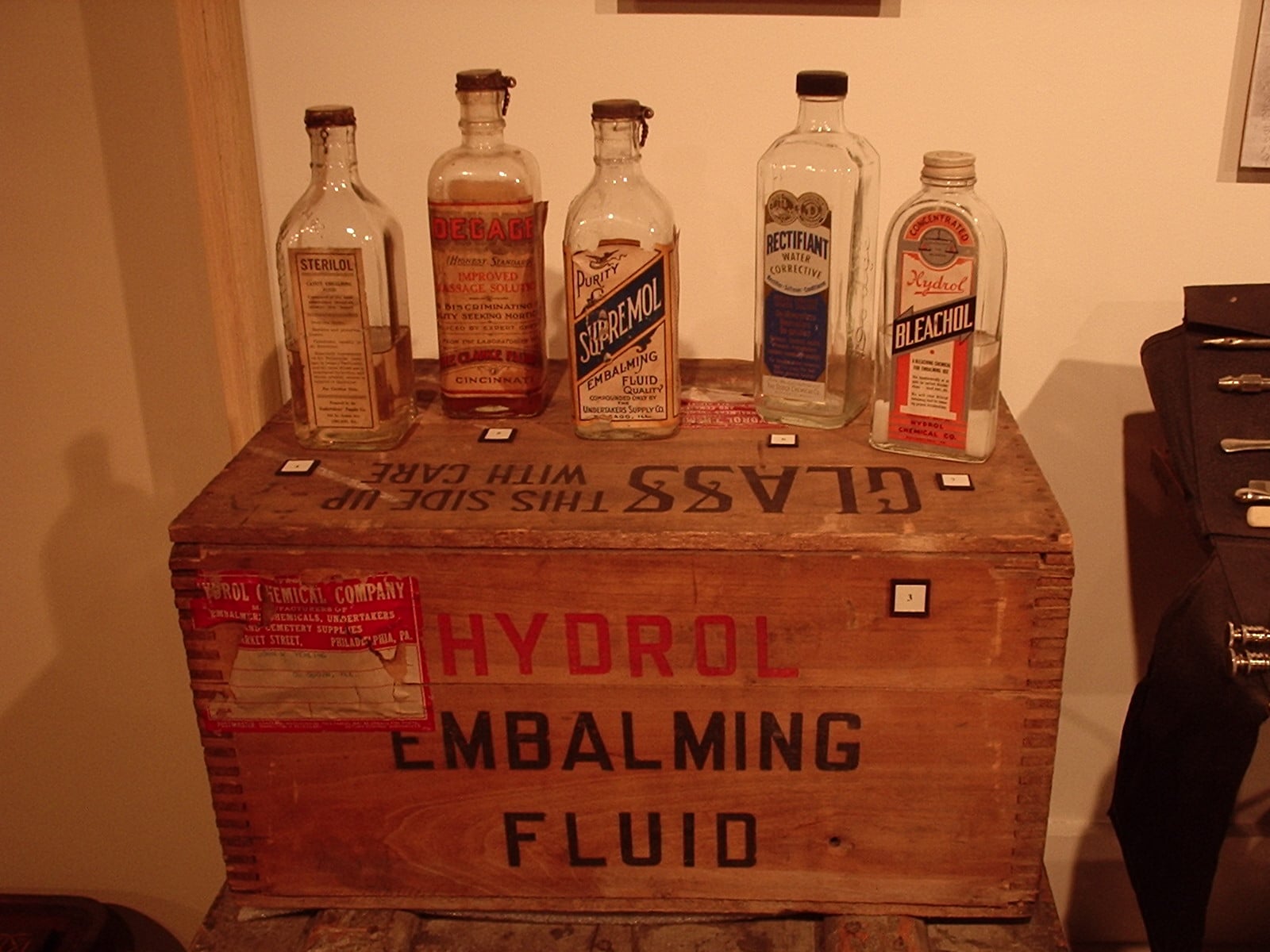
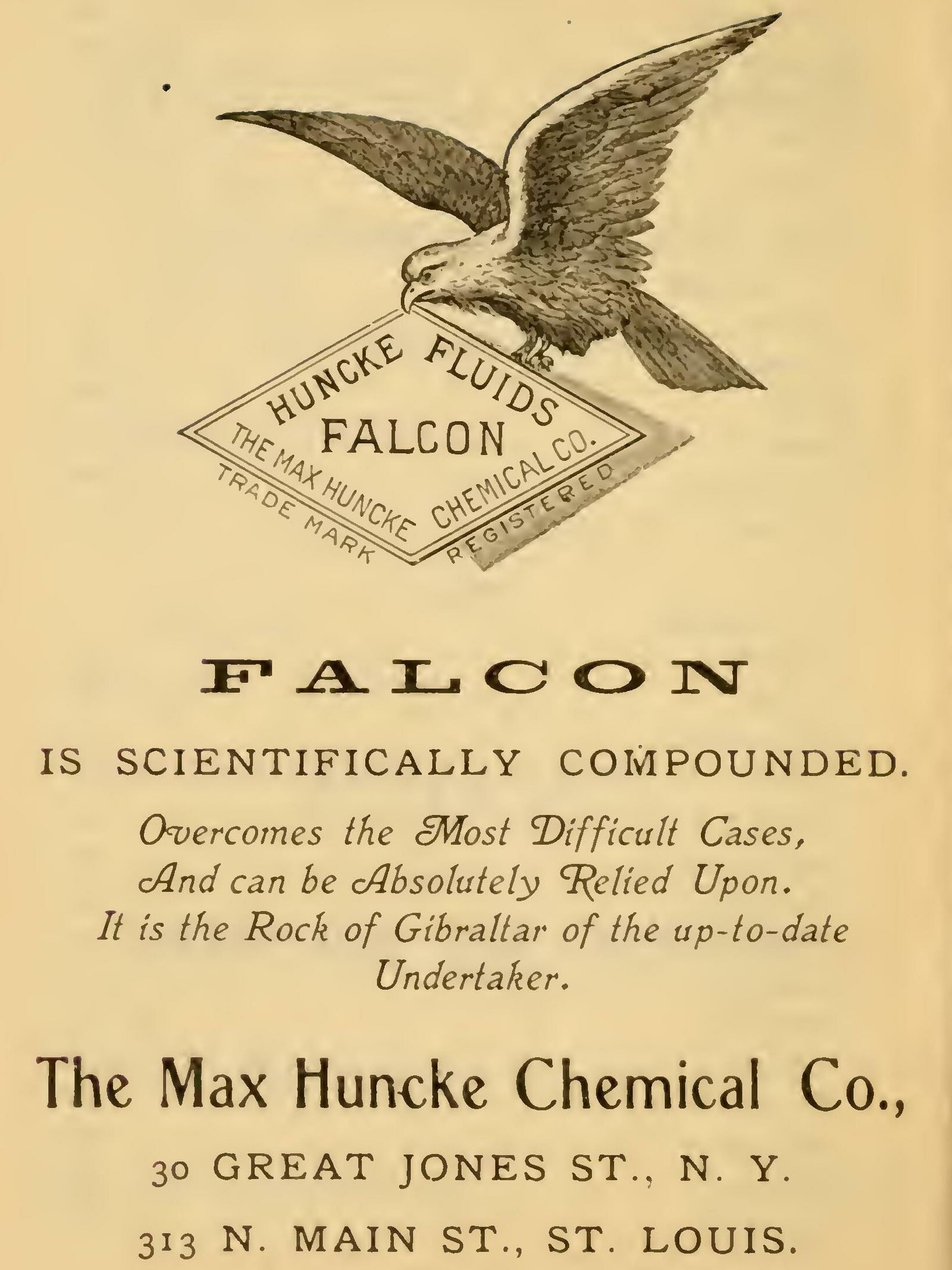
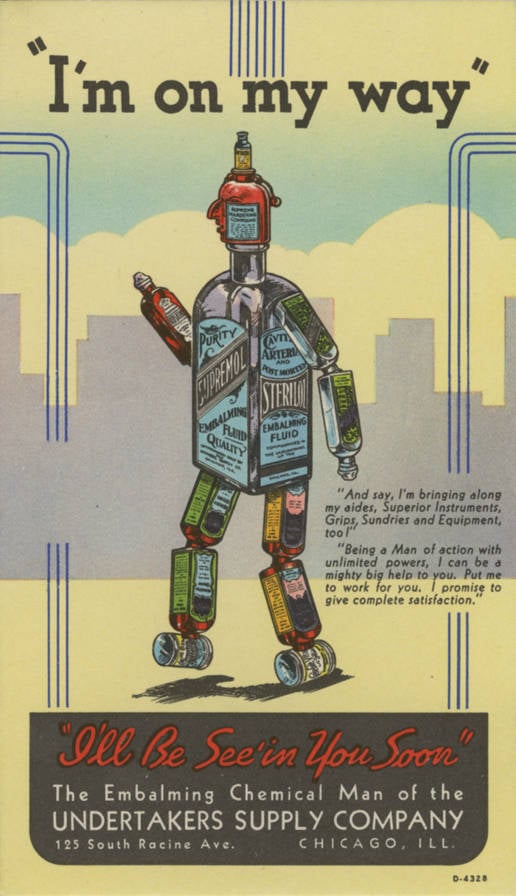
The trade’s own language blurred this. A period catalog promising that a fluid “arrests decay” was describing an outcome, not a mechanism, and the mechanisms behind that promise changed completely around 1900 even as the marketing copy stayed the same.
2.2 The Arsenical Era
The first American arterial fluids, developed as the Civil War created sudden demand for shipping the dead home over long distances, were built on the salts of heavy metals — most notoriously arsenic, but also mercury, zinc, antimony, lead, and copper. Thomas Holmes, the era’s central figure, worked with solutions variously described as containing arsenic, mercury salts, zinc chloride, creosote, turpentine, and alcohol. These were preservatives because they were poisons. Arsenic compounds are broadly cytotoxic and antimicrobial: they interfere with the enzyme systems of the bacteria of putrefaction as thoroughly as they interfere with those of any other living cell. A body saturated with arsenious acid was, in effect, too toxic to rot.
The quantities were extraordinary by any modern standard. Contemporary accounts and later cemetery studies describe formulas of roughly four ounces of arsenious acid per gallon of fluid, with anywhere from a few ounces to as much as twelve pounds of arsenic ending up in a single body. There was no standardization: each supply house and each operator had a recipe, and “more” was widely assumed to mean “safer.” The chemistry that made these fluids effective is exactly the chemistry that made them a hazard to everyone downstream of them — the operators who handled them daily, the anatomy students who later dissected metal-fixed cadavers, and, eventually, the ground itself.
2.3 The Poison That Never Leaves
Arsenic is an element. Unlike an organic molecule, it cannot be broken down into something harmless — it can only move, change oxidation state, and bind to different minerals. That single fact is why the arsenical era is not a closed chapter but a live environmental problem at historic cemeteries today.
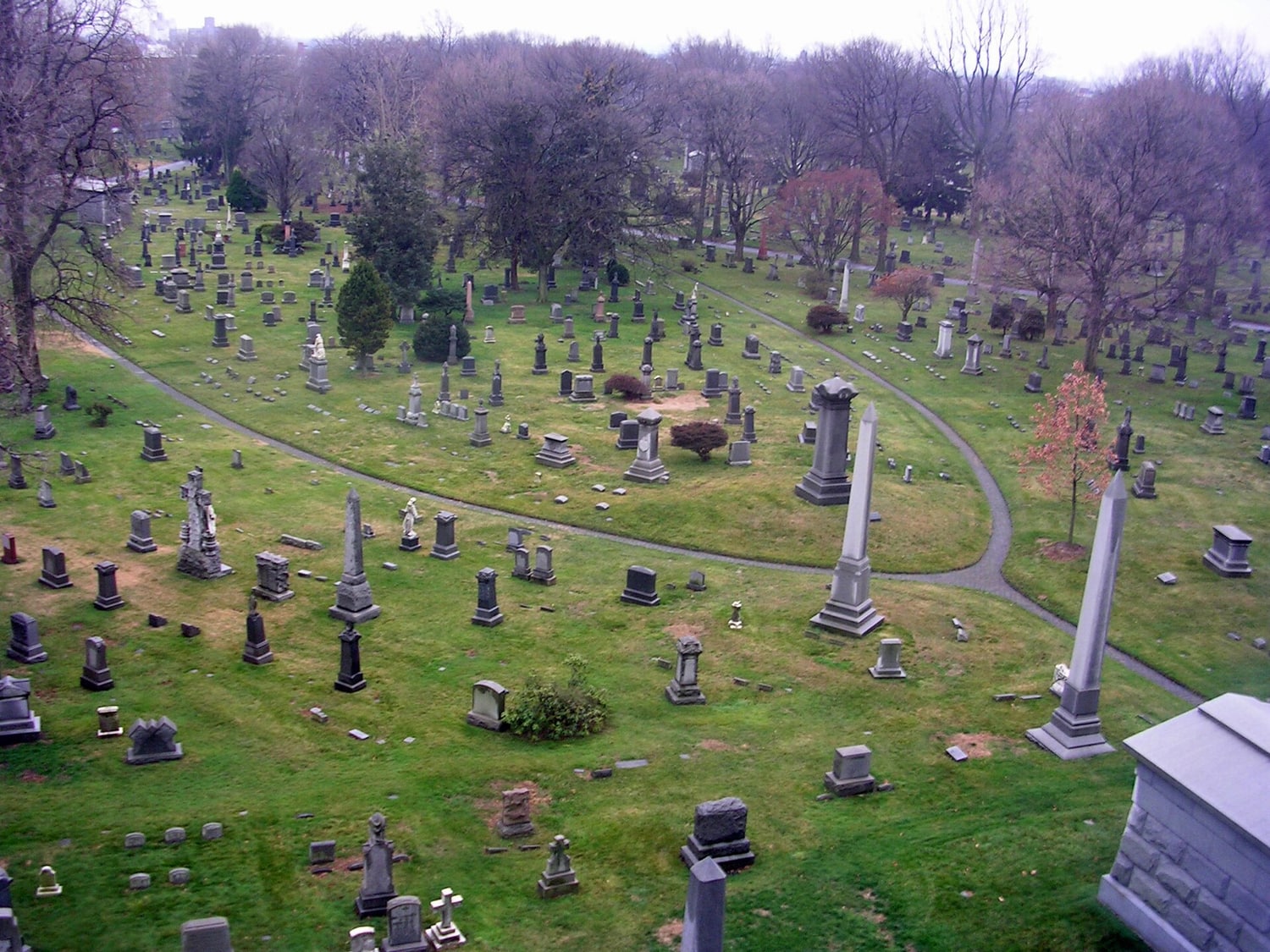
As a metal-embalmed body and its casket degrade over the decades, water percolating through the grave mobilizes the arsenic and carries it downward into the surrounding soil and, where the water table is shallow, into groundwater. Geochemists and environmental-health researchers have documented the result. Work associated with Columbia University’s Benjamin Bostick and Joseph Graziano, mortuary scientists such as the University of Minnesota’s Mike Mathews, and independent surveys have all pointed to the same signature: elevated arsenic in and around cemeteries dating to the mid-to-late nineteenth century, correlated with the arsenical-embalming years rather than with local geology. A USGS-sponsored survey near an old cemetery in Iowa City reportedly found arsenic at roughly three times the federal drinking-water limit. The concern is sharpest in rural areas where households still draw from private wells, and where a Civil-War-era graveyard uphill of a water supply is not a historical curiosity but a potential source term. The lesson is one the trade did not — and at the time could not — anticipate: a preservative chosen for being indestructibly toxic is, by that same property, indestructibly persistent in the environment.
2.4 The Forensic Blind Spot
Arsenical embalming also broke the era’s leading tool against murder. The nineteenth century had, for the first time, a reliable chemical test for arsenic in human tissue — the Marsh test, developed in 1836, which could detect minute quantities and had made arsenic far riskier for poisoners than the “inheritance powder” of earlier centuries. Toxicology was becoming a courtroom science precisely because arsenic could now be found in an exhumed body.
Arsenical embalming quietly demolished that advantage. Once it became routine to pump pounds of arsenic into a body as a matter of ordinary funeral practice, the presence of arsenic in exhumed remains proved nothing at all. A poisoner’s dose and an embalmer’s dose were the same element, and the fluid could deposit vastly more than any lethal poisoning would. Investigators had no way to distinguish arsenic administered to kill from arsenic administered to preserve, and the routine embalming of a victim could mask — or, just as troubling, appear to manufacture — evidence of poisoning. The tool that had made arsenic murder detectable was neutralized by the mortuary’s own chemistry. This forensic argument, alongside the mounting occupational toll, became one of the practical reasons the trade and its regulators turned away from metal salts. (Modern speciation methods that separate inorganic arsenite and arsenate from organic and embalming-derived forms have since restored some ability to disentangle these cases, but that capability is a late-twentieth-century development, not a nineteenth-century one.)
2.5 The Fixative Turn: Formaldehyde
The replacement chemistry came from the laboratory, not the funeral trade, and it was a genuinely different idea. Formaldehyde was first observed in 1859 by the Russian chemist Alexander Butlerov, as a byproduct while he was pursuing methylene glycol, and it was conclusively identified and characterized in 1868 by August Wilhelm von Hofmann in Berlin, who produced it by passing methanol vapor and air over a heated platinum spiral — essentially the principle of industrial formaldehyde manufacture to this day. For a generation it was a laboratory curiosity and a disinfectant.
Its preservative significance was pinned down in 1893, when the German physician Ferdinand Blum (born 1865) noticed, while studying formaldehyde as a disinfectant, that the solution had hardened the skin of his own fingertips. That accidental observation identified formaldehyde not as a mere poison but as a fixative, and it made formaldehyde — as its aqueous solution, formalin — the dominant fixative in histology, pathology, and anatomy, which it remains.
What sets fixation apart is the chemistry. Formaldehyde is a small, reactive molecule (H₂C=O) that reacts with the nucleophilic groups on proteins — chiefly the amine of the amino acid lysine, and to a lesser extent arginine and other side chains. It first forms a methylol group, which loses water to give a Schiff base (an imine), and that reactive intermediate can then bridge to a second nearby group to form a stable methylene bridge — a permanent covalent tether linking one part of a protein to another, or one protein to its neighbor. Multiplied across a tissue, these cross-links knit the proteins into an insoluble, interlocked network. The molecular machinery of decay depends on recognizing and cleaving proteins in their native, mobile forms; once those proteins are stitched together and their shapes frozen, both the body’s own enzymes and the enzymes of putrefying bacteria lose their substrate. Fixation preserves by cross-linking, where arsenic preserved by killing — and the fixed network is stable without needing to keep a poison resident in the tissue in mortal quantities.
Commercial formaldehyde production had begun in Germany in the 1880s and spread to Belgium, France, and the United States by the turn of the century, so by the time Blum’s discovery reached the funeral trade the raw material was industrially available. American supply houses — Dolge and the Embalmers’ Supply Company among them — moved formaldehyde-based fluids into the market in the mid-1890s, and within roughly a decade formaldehyde had displaced the metal salts as the working preservative of the trade. The electric embalming machine, arriving in the same decades, is the apparatus half of this same modernization: a formaldehyde-era fluid distributed by a pump that could hold pressure and rate on a gauge.
2.6 Regulation and the End of Arsenic
The turn away from arsenic was driven as much by law and mortality statistics as by better chemistry. The occupational toll had become impossible to ignore: by the early twentieth century a significant number of embalmers had themselves been poisoned or killed by daily handling of arsenical fluids, and anatomy programs were reporting illness among students dissecting metal-fixed cadavers. Combined with the forensic problem, this made arsenic indefensible just as a superior alternative arrived.
Michigan appears to have been the first state to ban arsenic in embalming fluid, in 1895 — a notable local footnote for this collection — with other states following and broader federal restriction commonly dated to around 1910. The regulatory arc and the chemical arc converged: arsenical fluids were prohibited at almost exactly the moment formaldehyde made them unnecessary, so the ban accelerated a substitution that the chemistry was already driving. Two legacies outlived the switch. The environmental one is still in the ground, because the element the trade abandoned does not decay and continues to mark the cemeteries of the arsenical decades. The forensic one shaped a century of toxicology, a cautionary case of how an industrial practice can quietly disable a scientific test. And the chemistry that replaced arsenic carries its own well-documented hazards — formaldehyde is an irritant and a recognized human carcinogen, and its regulation as an occupational exposure is a continuing story rather than a solved one. The through-line of this whole wing is that preservation is never neutral: every fluid that stops a body from decaying does so by being reactive or toxic enough to matter to the living, the trade, and the ground long after the funeral.
Sources
- Smithsonian Magazine — “Arsenic and Old Graves: Civil War-Era Cemeteries May Be Leaking Toxins”
- The Woodlands (Philadelphia) — “Arsenic and Old Cemeteries”
- Utne — “Arsenic Contamination in Graveyards: How the Dead Are Hurting the Environment”
- Microscopy Today / Oxford Academic — “Formaldehyde as a Fixative for Light and Electron Microscopy” (Blum, 1893)
- Surgeons’ Hall Museums — “A Few Words About Formaldehyde” (Blum’s finger observation, 1893)
- Nature Communications — “Mass spectrometry reveals the chemistry of formaldehyde cross-linking in structured proteins” (methylene-bridge mechanism)
- Journal of Biological Chemistry — “Formaldehyde Crosslinking: A Tool for the Study of Chromatin Complexes”
- Formacare — “History of Formaldehyde” (Butlerov 1859, Hofmann 1868, industrial production)
- EBSCO Research Starters — “Marsh test” (1836 arsenic detection)
- Biology Insights — “Is Arsenic Detectable in an Autopsy?” (speciation and embalming-fluid confounding)
- Earth.com — “Preserving the body: Embalming practices began during the Civil War”
- American Chemical Society, Today’s Chemist at Work — “Embalming: A ‘Living’ Rite” (PDF)
Comments (0)